
Archived Page
This page is no longer maintained.
For up-to-date information please see the
new website
Gazing on the Gages
Cliveden Gages (Cliveden Village) has had a long and tortuous gestation, perhaps appropriately in view of its previous incarnation as a maternity hospital which closed in the 1980s. The site became a ghost town, not only an eyesore but a haven for drug addicts. Its landlord the National Trust (NT) eventually applied for outline planning permission for a retirement complex for the over-55s and in 1997 South Bucks District Council (SBDC) gave outline approval for 99 houses plus 35 apartments for sheltered accommodation together with a surgery and communal buildings. The NT was slow off the mark and ran into a housing price collapse. When the market eventually picked up the NT chose Countryside Properties (CP) to develop the site and in 2004 this partnership submitted a revised planning application for 197 dwellings without age restriction, including 20% affordable homes. A successful campaign by the Society led to a public enquiry in August 2005 which concluded that it 'would be an undesirable development of the green belt' and its recommendation for rejection of the application was accepted by Deputy Prime Minister John Prescott. (An article about this campaign and the subsequent victory is in Newsletter 85 – the spring 2006 edition). The NT and CP were legally required to build to the original permission if their revised application failed. However they successfully applied for SBDC permission to amend the scheme to 134 units without the surgery or any sheltered accommodation. Construction commenced in 2006 with the first houses ready for occupation in 2007.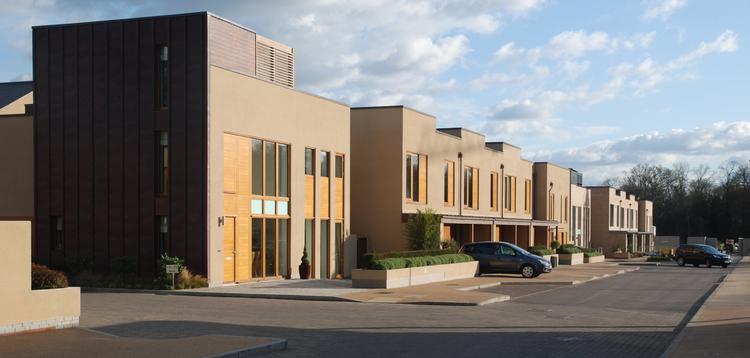 This was at the height of the housing boom. Queues of people visited
the show houses and put their names down for the new houses and
apartments. Smarting perhaps at the criticism levelled at it for
attempting to over-develop the site, the NT insisted on homes built of
sustainable materials with all the latest gadgets to reduce carbon
dioxide emissions. This included having solar heating panels and the
majority of the houses had either no garages or only very small ones.
The apartments had underground parking but all other cars had to be
parked in the open or under 'pagodas' that offered no shelter at all.
However, all the units had bicycle sheds! At least the original
planning permission was for two parking places for each unit instead of
the 1.6 proposed for the rejected development.
There was a further problem. The NT is not allowed to sell properties
or land; the units are therefore on a 125-year lease. This being the
first NT development of its kind, it decided to use its normal lease
with some modifications. Of course most NT lettings are of listed
buildings, so there were and still are onerous restrictions on what
could be done, both to the houses and in the houses. For instance, the
leases have a specific clause banning hot tubs. The mind boggles at
what must have taken place on NT property to require this – although
with Cliveden in mind, perhaps not! The original lease also did not
allow pets of any kind and elderly prospective residents had to be
informed that they would have to kill their pets before they could move
in. Unsurprisingly, this was not popular and as a result the lease was
modified to allow well-behaved pets approved by the management company.
Needless to say this was ignored by everyone and there is not (as far
as I am aware) an approved pets list (and if there is, our cat is not
on it).
However the lease was the least of the worries for the new owners now
moving in. CP was anxious to build as quickly as possible and the
quality of the fittings and workmanship were consequently affected.
Some of this was due to poor craftsmenship and some to poor materials.
A major problem (one of many) was the use of oak frames, doors and
windows, perhaps at the insistence of the NT. Oak is a splendid wood
but takes a long time (and is expensive) to dry out. The oak used was
clearly not properly seasoned and as a result the windows and doors
shrank and jammed, and in particular the window frames let water in.
The residents formed a 'snagging committee' (only recently disbanded)
to force CP to rectify the faults and the damage.
There were many other problems. To compound things even further, with
the financial crisis of 2007–8, the bottom fell out of the housing
market. Residents who had paid a premium for their homes to buy them in
the rush had the chagrin of seeing similar homes nearby sold at
significant discounts and with stamp duty paid. It was still not enough
however, and Lloyds Bank was forced to buy 50% of CP. Finally, all
building work ceased in 2009 with only the first two phases built. It
wasn't until almost three years later that construction of Phase 3
commenced, in early 2011.
CP had learnt some lessons. While the designs of the new houses and
apartments are essentially the same, they differ in various respects
including having brick facades instead of a rendered finish and black
aluminium door and window frames rather than oak. The first residents
of the new phase arrived in early 2012. There were some snagging issues
but these were relatively minor compared with the first two phases.
However sales were sluggish and after a year 5 of the 16 houses remain
unsold. These are the smaller houses, without garages.
CP has to finish the whole development by 2014 or lose the right to
build. Consequently the last phase of construction has begun while
planning permission is sought for a significantly different scheme with
fewer small houses and more large houses with large garages and a top
price of £1.1m. This will reduce the total number of units from 134 to
128. It surprises some residents that it has taken so long for CP to
realise that fewer larger houses and apartments will sell more easily
and be more profitable. One estate agent director, asked to comment,
said 'Well, they are from Essex you know'. This is a lesson other
developers will do well to note (but don't hold your breath).
On the positive side, the problems have resulted in a relatively
tight-knit and friendly community. Although the residents are prevented
from taking control of the management company until the last unit is
sold, a committee has been set up to co-ordinate action against CP and
the NT on behalf of the residents. There are ongoing problems with CP
in respect of security, access gates software, lighting, signage and
other matters, and with the NT in respect of maintenance of the
surrounding grounds and access to the Cliveden estate, which was
promised but is restricted to opening hours.
As might be expected, the residents have much in common with each other
and have made many friends. The houses themselves are very modern in
style, with large windows and the latest and high quality furnishings
and fittings in the bathrooms and kitchens. There is a flourishing
social calendar with quiz nights, wine tasting, book readings and
theatre and restaurant visits. This of course is apart from the idyllic
setting with walks in the Cliveden estate within easy reach, and for
those who wish, the Cliveden Club with the benefits of the swimming
pools and social activities that go with that membership.
All-in-all, almost all the residents are very happy they moved to the
Village (as it is known) and feel that once CP has gone and they can
control their own affairs, it will be a fabulous place in which to be
retired.
John Hanford
This was at the height of the housing boom. Queues of people visited
the show houses and put their names down for the new houses and
apartments. Smarting perhaps at the criticism levelled at it for
attempting to over-develop the site, the NT insisted on homes built of
sustainable materials with all the latest gadgets to reduce carbon
dioxide emissions. This included having solar heating panels and the
majority of the houses had either no garages or only very small ones.
The apartments had underground parking but all other cars had to be
parked in the open or under 'pagodas' that offered no shelter at all.
However, all the units had bicycle sheds! At least the original
planning permission was for two parking places for each unit instead of
the 1.6 proposed for the rejected development.
There was a further problem. The NT is not allowed to sell properties
or land; the units are therefore on a 125-year lease. This being the
first NT development of its kind, it decided to use its normal lease
with some modifications. Of course most NT lettings are of listed
buildings, so there were and still are onerous restrictions on what
could be done, both to the houses and in the houses. For instance, the
leases have a specific clause banning hot tubs. The mind boggles at
what must have taken place on NT property to require this – although
with Cliveden in mind, perhaps not! The original lease also did not
allow pets of any kind and elderly prospective residents had to be
informed that they would have to kill their pets before they could move
in. Unsurprisingly, this was not popular and as a result the lease was
modified to allow well-behaved pets approved by the management company.
Needless to say this was ignored by everyone and there is not (as far
as I am aware) an approved pets list (and if there is, our cat is not
on it).
However the lease was the least of the worries for the new owners now
moving in. CP was anxious to build as quickly as possible and the
quality of the fittings and workmanship were consequently affected.
Some of this was due to poor craftsmenship and some to poor materials.
A major problem (one of many) was the use of oak frames, doors and
windows, perhaps at the insistence of the NT. Oak is a splendid wood
but takes a long time (and is expensive) to dry out. The oak used was
clearly not properly seasoned and as a result the windows and doors
shrank and jammed, and in particular the window frames let water in.
The residents formed a 'snagging committee' (only recently disbanded)
to force CP to rectify the faults and the damage.
There were many other problems. To compound things even further, with
the financial crisis of 2007–8, the bottom fell out of the housing
market. Residents who had paid a premium for their homes to buy them in
the rush had the chagrin of seeing similar homes nearby sold at
significant discounts and with stamp duty paid. It was still not enough
however, and Lloyds Bank was forced to buy 50% of CP. Finally, all
building work ceased in 2009 with only the first two phases built. It
wasn't until almost three years later that construction of Phase 3
commenced, in early 2011.
CP had learnt some lessons. While the designs of the new houses and
apartments are essentially the same, they differ in various respects
including having brick facades instead of a rendered finish and black
aluminium door and window frames rather than oak. The first residents
of the new phase arrived in early 2012. There were some snagging issues
but these were relatively minor compared with the first two phases.
However sales were sluggish and after a year 5 of the 16 houses remain
unsold. These are the smaller houses, without garages.
CP has to finish the whole development by 2014 or lose the right to
build. Consequently the last phase of construction has begun while
planning permission is sought for a significantly different scheme with
fewer small houses and more large houses with large garages and a top
price of £1.1m. This will reduce the total number of units from 134 to
128. It surprises some residents that it has taken so long for CP to
realise that fewer larger houses and apartments will sell more easily
and be more profitable. One estate agent director, asked to comment,
said 'Well, they are from Essex you know'. This is a lesson other
developers will do well to note (but don't hold your breath).
On the positive side, the problems have resulted in a relatively
tight-knit and friendly community. Although the residents are prevented
from taking control of the management company until the last unit is
sold, a committee has been set up to co-ordinate action against CP and
the NT on behalf of the residents. There are ongoing problems with CP
in respect of security, access gates software, lighting, signage and
other matters, and with the NT in respect of maintenance of the
surrounding grounds and access to the Cliveden estate, which was
promised but is restricted to opening hours.
As might be expected, the residents have much in common with each other
and have made many friends. The houses themselves are very modern in
style, with large windows and the latest and high quality furnishings
and fittings in the bathrooms and kitchens. There is a flourishing
social calendar with quiz nights, wine tasting, book readings and
theatre and restaurant visits. This of course is apart from the idyllic
setting with walks in the Cliveden estate within easy reach, and for
those who wish, the Cliveden Club with the benefits of the swimming
pools and social activities that go with that membership.
All-in-all, almost all the residents are very happy they moved to the
Village (as it is known) and feel that once CP has gone and they can
control their own affairs, it will be a fabulous place in which to be
retired.
John Hanford