Archived Page
This page is no longer maintained.
For up-to-date information please see the
new website
A Taplow Olympian
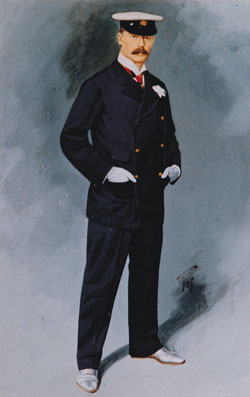
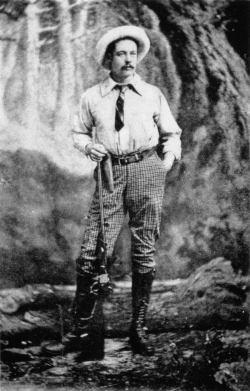
(Lord Desborough's Sporting Legacy) This year, the year of the Olympics, the SGI-UK, a lay Buddhist centre in Taplow Court, are celebrating this event by holding an exhibition of the life and times of Lord Desborough. This exhibition will be staged at Taplow Court from April 15th to 16th September and will feature paintings, sculpture, posters, photographs, sporting equipment, medals and trophies. This remarkable man was a real-life adventure hero who climbed mountains, swam rapids and battled through jungles. A champion rower, punter and rider, he was the winner of Olympic silver for fencing and was known to his contemporaries as ‘probably the best all-round sportsman in the world’. Desborough – whose family owned Taplow Court from 1852 to 1952 - was a dedicated public servant, supporter of many charitable causes and was Mayor of Maidenhead from 1895 to 1897. He was also the father of the soldier-poet, Julian Grenfell. Robert Samuels, General Director SGI-UK, said: 'As Buddhists we feel an affinity with Desborough – because he created friendship, harmony and goodwill, and believed sport could be a potent force in fostering peace amongst nations.’ One of his major achievements was to introduce the games for the first time in Britain in 1908. The following material was kindly provided by SGI-UK. (Ed)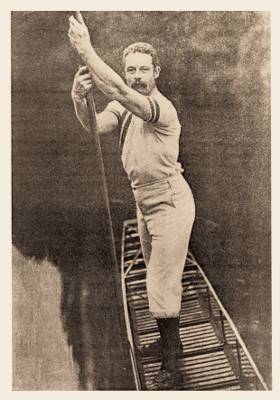 The founding of the Olympic Games, as we recognise them, began at the turn of the 20th century. The modern Games were the vision of a Frenchman, Baron Pierre de Coubertin. He believed a reform of the French education system, incorporating sports and physical training, would revitalise the nation after its defeat by Prussia in 1870.
He took his inspiration from the English public school system, Henley Regatta and the excavations at the site of the ancient Greek Games at Olympia and in particular from the Olympian Society started, in 1850 by Dr William Penny Brookes, a physician from Much Wenlock, Shropshire. The doctor, who had a keen interest in the values of antiquity and believed that a healthy body was as important as a healthy mind, was campaigning for a revival of the Olympic Games in Athens. Brookes held an annual Wenlock Games at Linden Fields, consisting of traditional English rural sports.
At an International Congress on amateur sport held at the Sorbonne in June 1894, it was decided to revive the Games and the International Olympic Committee (IOC) was founded. Both the Prince of Wales (later Edward VII) and Arthur Balfour, a future Prime Minister, close associates of William Henry Grenfell of Taplow Court, approved of Pierre de Coubertin’s efforts. The first Games were held in Athens in 1896, followed by Paris in 1900 and St. Louis in 1904. At the IOC session that same year, it was proposed that the 1908 Games be held in Rome. As a result of this meeting, the British Olympic Association was founded at the House of Commons in 1905 with William Henry Grenfell (later Lord Desborough) as Chairman.
A separate cycle of Athenian Games was also happening at this time with events held in 1906 and 1910. Lord Desborough participated in 1906 as a member of the British Fencing team and His Majesty’s representative. Lord Desborough returned with the suggestion that the 1908 Olympic Games be held in London as Rome was proving impractical: the eruption of Mount Vesuvius in 1906 left Italy with calls on their funding for disaster relief and rebuilding.
As Chair of the British Olympic Association and with the support of his king, Edward VII, the dynamic Lord Desborough officially accepted the IOC’s invitation to step in as host country in November 1906. They had only eighteen months to organise this pioneering event. Lord Desborough, being a well-connected landowner, parliamentarian and philanthropist, cut a deal with the organisers of a Franco-British Exhibition, due to take place in the same year at Shepherds Bush. A stadium was planned as part of the complex. As managing director of the sports section, Lord Desborough persuaded the organisers to pay for the Olympic standard, 66,000 capacity stadium, plus donating £2,000 towards its running costs. With no government funding available in those days, our Olympic hero made personal appeals in the press right up until a couple of weeks before the Games opened.
'Lord Desborough is the real hero of the Olympiad. He delivered 139 speeches at luncheons and banquets and other social functions held in connection with the games' (Throne, August 15, 1908).
Donations eventually exceeded the amount required and appeals had to be made to the public to stop sending money. Despite this achievement, the Press seized on any possible negative aspect of the Games – the bad weather (this was the wettest Games in history), the high admission prices and accusations of unfair judging. But there’s no doubt these Games were a resounding success, with White City stadium considered by some to be a technological marvel. The stadium track was three laps to the mile, not the current standard of 400 metres, with a pool for swimming and diving and platforms for wrestling and gymnastics at the centre.
Lord Desborough and his team had to standardise the rules for the 22 sports scheduled to take place at the Games and also translate them into the languages of the 23 competing nations. The distance from the start of the Marathon to the finish at the stadium was established at these Games. The original distance of 25 miles was changed to 26 miles so the marathon could start at Windsor Castle and then changed again at the request of Princess Mary so that the start would be beneath the windows of the Royal Nursery. The Queen gave the signal and Lord Desborough fired the starting gun. To ensure the race would end in front of the King, the finish line was moved by British officials to become the standard length covering 26 miles 385 yards (42.195 km).
William Henry Grenfell or Willy, as he was known, was the first and last Lord Desborough, born on October 30 1855. At six feet five inches tall, with a well-developed physique, he was a striking figure.
He went to Harrow School for Boys, later graduating from Balliol College, Oxford in 1879. His sporting achievements are legend and his passion for sport and excellence at multiple disciplines quite remarkable: Willy captained the Oxford University Boat Club and Athletic Club. He rowed in the controversial Dead-Heat Boat Race of 1877, and was part of the crew for Oxford’s win in 1878. He won a silver medal for fencing as part of the Athens Games held in 1906, at the age of fifty. He excelled at mountaineering, cricket, tennis, swimming, fishing and big-game hunting, coach-driving and wrestling. He swam across the base of the Niagara rapids twice; the second time in a snowstorm, just to prove to a doubting friend that he’d done it the first time! He climbed the Matterhorn, the Little Matterhorn, Monte Rosa and the Weisshorn mountains in just eight days. He rowed across the English Channel with an Oxford crew of eight in just 4 hours and 22 minutes and was Amateur Punting Champion of the Upper Thames for three successive years.
Grenfell was not only an unparallelled sportsman in his era, but also a dedicated public servant. He entered parliament as a Liberal MP for Salisbury between 1880 and 1886, becoming Private Secretary to the Chancellor of the Exchequer in 1885. He was MP for Hereford in 1892 and 1893. He was High Sheriff of Buckinghamshire in 1889, and Mayor of Maidenhead for two terms in 1896-7. He fell out with Prime Minister William Gladstone over the Irish Home Rule bill, stood down and involved himself strenuously in local government before becoming Conservative MP for Wycombe from 1900-1905. His peerage, awarded for services to sport and local government, made him Baron Desborough of Taplow in 1905.
The Desboroughs had three sons and two daughters. His eldest son, the war poet Julian Grenfell, was killed in action in 1915. His second son, Billy, was also killed, about two months after his elder brother. A third son, Ivo, died in 1926 as a result of a car accident. The Desboroughs’ elder daughter, Monica, served as a nurse in the First World War, whilst her sister Imogen, an accomplished horsewoman and connoisseur of art, became Lady Gage of Firle Place, East Sussex. Following the tragic deaths of his sons, Lord Desborough is said to have become withdrawn. However, he remained willing to converse on sporting topics. He lived to the ripe old age of 90, dying in 1945 – a true testament to living actively.
The founding of the Olympic Games, as we recognise them, began at the turn of the 20th century. The modern Games were the vision of a Frenchman, Baron Pierre de Coubertin. He believed a reform of the French education system, incorporating sports and physical training, would revitalise the nation after its defeat by Prussia in 1870.
He took his inspiration from the English public school system, Henley Regatta and the excavations at the site of the ancient Greek Games at Olympia and in particular from the Olympian Society started, in 1850 by Dr William Penny Brookes, a physician from Much Wenlock, Shropshire. The doctor, who had a keen interest in the values of antiquity and believed that a healthy body was as important as a healthy mind, was campaigning for a revival of the Olympic Games in Athens. Brookes held an annual Wenlock Games at Linden Fields, consisting of traditional English rural sports.
At an International Congress on amateur sport held at the Sorbonne in June 1894, it was decided to revive the Games and the International Olympic Committee (IOC) was founded. Both the Prince of Wales (later Edward VII) and Arthur Balfour, a future Prime Minister, close associates of William Henry Grenfell of Taplow Court, approved of Pierre de Coubertin’s efforts. The first Games were held in Athens in 1896, followed by Paris in 1900 and St. Louis in 1904. At the IOC session that same year, it was proposed that the 1908 Games be held in Rome. As a result of this meeting, the British Olympic Association was founded at the House of Commons in 1905 with William Henry Grenfell (later Lord Desborough) as Chairman.
A separate cycle of Athenian Games was also happening at this time with events held in 1906 and 1910. Lord Desborough participated in 1906 as a member of the British Fencing team and His Majesty’s representative. Lord Desborough returned with the suggestion that the 1908 Olympic Games be held in London as Rome was proving impractical: the eruption of Mount Vesuvius in 1906 left Italy with calls on their funding for disaster relief and rebuilding.
As Chair of the British Olympic Association and with the support of his king, Edward VII, the dynamic Lord Desborough officially accepted the IOC’s invitation to step in as host country in November 1906. They had only eighteen months to organise this pioneering event. Lord Desborough, being a well-connected landowner, parliamentarian and philanthropist, cut a deal with the organisers of a Franco-British Exhibition, due to take place in the same year at Shepherds Bush. A stadium was planned as part of the complex. As managing director of the sports section, Lord Desborough persuaded the organisers to pay for the Olympic standard, 66,000 capacity stadium, plus donating £2,000 towards its running costs. With no government funding available in those days, our Olympic hero made personal appeals in the press right up until a couple of weeks before the Games opened.
'Lord Desborough is the real hero of the Olympiad. He delivered 139 speeches at luncheons and banquets and other social functions held in connection with the games' (Throne, August 15, 1908).
Donations eventually exceeded the amount required and appeals had to be made to the public to stop sending money. Despite this achievement, the Press seized on any possible negative aspect of the Games – the bad weather (this was the wettest Games in history), the high admission prices and accusations of unfair judging. But there’s no doubt these Games were a resounding success, with White City stadium considered by some to be a technological marvel. The stadium track was three laps to the mile, not the current standard of 400 metres, with a pool for swimming and diving and platforms for wrestling and gymnastics at the centre.
Lord Desborough and his team had to standardise the rules for the 22 sports scheduled to take place at the Games and also translate them into the languages of the 23 competing nations. The distance from the start of the Marathon to the finish at the stadium was established at these Games. The original distance of 25 miles was changed to 26 miles so the marathon could start at Windsor Castle and then changed again at the request of Princess Mary so that the start would be beneath the windows of the Royal Nursery. The Queen gave the signal and Lord Desborough fired the starting gun. To ensure the race would end in front of the King, the finish line was moved by British officials to become the standard length covering 26 miles 385 yards (42.195 km).
William Henry Grenfell or Willy, as he was known, was the first and last Lord Desborough, born on October 30 1855. At six feet five inches tall, with a well-developed physique, he was a striking figure.
He went to Harrow School for Boys, later graduating from Balliol College, Oxford in 1879. His sporting achievements are legend and his passion for sport and excellence at multiple disciplines quite remarkable: Willy captained the Oxford University Boat Club and Athletic Club. He rowed in the controversial Dead-Heat Boat Race of 1877, and was part of the crew for Oxford’s win in 1878. He won a silver medal for fencing as part of the Athens Games held in 1906, at the age of fifty. He excelled at mountaineering, cricket, tennis, swimming, fishing and big-game hunting, coach-driving and wrestling. He swam across the base of the Niagara rapids twice; the second time in a snowstorm, just to prove to a doubting friend that he’d done it the first time! He climbed the Matterhorn, the Little Matterhorn, Monte Rosa and the Weisshorn mountains in just eight days. He rowed across the English Channel with an Oxford crew of eight in just 4 hours and 22 minutes and was Amateur Punting Champion of the Upper Thames for three successive years.
Grenfell was not only an unparallelled sportsman in his era, but also a dedicated public servant. He entered parliament as a Liberal MP for Salisbury between 1880 and 1886, becoming Private Secretary to the Chancellor of the Exchequer in 1885. He was MP for Hereford in 1892 and 1893. He was High Sheriff of Buckinghamshire in 1889, and Mayor of Maidenhead for two terms in 1896-7. He fell out with Prime Minister William Gladstone over the Irish Home Rule bill, stood down and involved himself strenuously in local government before becoming Conservative MP for Wycombe from 1900-1905. His peerage, awarded for services to sport and local government, made him Baron Desborough of Taplow in 1905.
The Desboroughs had three sons and two daughters. His eldest son, the war poet Julian Grenfell, was killed in action in 1915. His second son, Billy, was also killed, about two months after his elder brother. A third son, Ivo, died in 1926 as a result of a car accident. The Desboroughs’ elder daughter, Monica, served as a nurse in the First World War, whilst her sister Imogen, an accomplished horsewoman and connoisseur of art, became Lady Gage of Firle Place, East Sussex. Following the tragic deaths of his sons, Lord Desborough is said to have become withdrawn. However, he remained willing to converse on sporting topics. He lived to the ripe old age of 90, dying in 1945 – a true testament to living actively.