
Archived Page
This page is no longer maintained.
For up-to-date information please see the
new website
The Chestnut Crisis
In the previous autumn edition of your newsletter I called attention to the apparent apathy of the relevant authorities to the growing plight of the chestnut trees in our area because of the simultaneous attack on them by both the horse chestnut leaf miner (destroying the leaves) and bleeding canker (seriously damaging the bark). This lack of interest seems not to have changed very much and what interest there is appears to be focussed more on the associated conker problem than the health and survival of the trees themselves. A recent Telegraph article complains about conker shortage this winter owing to their falling from the tree before they are ripe. The blame is placed on the poor August weather and the article laments the risk to the World Conker Championships. Not a mention of what must be the underlying cause.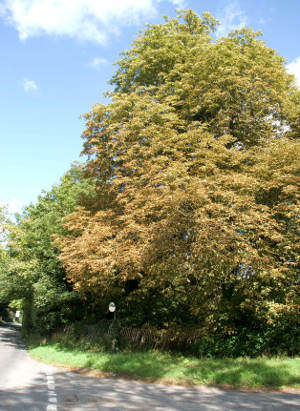 I am also dismayed that the last survey by the Forestry Commission of the problem that I can locate took place over two years ago.
When I spoke to the Tree people in SBDC about it in 2008 I was assured that trees were not at risk. The last survey by the Forestry Commission, however, made it clear that the bleeding canker is a tree killer. Younger trees are more at risk because the canker can spread round the girth of the tree quite quickly, but big trees can also die once they are girdled. Be it noted that the pathogen that causes this problem is not a quarantine pathogen so there is no statutory requirement in place requiring measures to prevent the spread of the disease. If this were not enough, the leaf miner moth is causing severe damage to the foliage of horse chestnuts on an annual basis, and results in defoliation before normal leaf-fall in the autumn. The larvae mine within the leaves and at high population densities they can destroy most of the leaf tissues. The trouble then spreads to the following year because the pupae over-winter in the uncollected fallen leaves. It has been established that these pupae are highly resistant to cold, surviving I gather temperatures as low as –20C in Hungary (yes, it’s a European import). This problem therefore results in a year-on-year increase in population. Are we therefore to eventually lose all our chestnuts in the same way we lost elms? (And there is now also the threat to our oak trees in the form of sudden oak death.)
However, there is some hope because a Cambridge partnership may have an answer. They claim to have a cure for the bleeding canker (Pseudomonas syringae pv. Aesculi). The partnership of JCA Arboricultural Consultants and Allicin Tree Care have developed a new product appropriately called ‘Conquer’ which is made from a garlic extract. Garlic, I’m told, is one of the oldest known effective anti-bacterial and anti-fungal agents but until now it has been impossible to harness its properties. Bleeding canker is a vascular disease that spreads through ground water and control was considered impossible because the bacteria spreads through a tree’s cambium layer. The product has been tested and confirmed as lethal to the bacteria. Interestingly its use in treating the chestnut seems to have some effect on the leaf miner moth as well since the garlic taints the tree sap and the moth finds this offensive.
So, there is hope but in the current tight financial climate shall we see our chestnuts being given any priority? I think it's up to us to lobby the SBDC and our MP and any other decision-maker we can think of, to obtain this treatment for our local trees before they disappear. It might also be worth contacting JCA on www.jcaac.com to ask when their product will be available and maybe treat our own trees.
Fred Russell
I am also dismayed that the last survey by the Forestry Commission of the problem that I can locate took place over two years ago.
When I spoke to the Tree people in SBDC about it in 2008 I was assured that trees were not at risk. The last survey by the Forestry Commission, however, made it clear that the bleeding canker is a tree killer. Younger trees are more at risk because the canker can spread round the girth of the tree quite quickly, but big trees can also die once they are girdled. Be it noted that the pathogen that causes this problem is not a quarantine pathogen so there is no statutory requirement in place requiring measures to prevent the spread of the disease. If this were not enough, the leaf miner moth is causing severe damage to the foliage of horse chestnuts on an annual basis, and results in defoliation before normal leaf-fall in the autumn. The larvae mine within the leaves and at high population densities they can destroy most of the leaf tissues. The trouble then spreads to the following year because the pupae over-winter in the uncollected fallen leaves. It has been established that these pupae are highly resistant to cold, surviving I gather temperatures as low as –20C in Hungary (yes, it’s a European import). This problem therefore results in a year-on-year increase in population. Are we therefore to eventually lose all our chestnuts in the same way we lost elms? (And there is now also the threat to our oak trees in the form of sudden oak death.)
However, there is some hope because a Cambridge partnership may have an answer. They claim to have a cure for the bleeding canker (Pseudomonas syringae pv. Aesculi). The partnership of JCA Arboricultural Consultants and Allicin Tree Care have developed a new product appropriately called ‘Conquer’ which is made from a garlic extract. Garlic, I’m told, is one of the oldest known effective anti-bacterial and anti-fungal agents but until now it has been impossible to harness its properties. Bleeding canker is a vascular disease that spreads through ground water and control was considered impossible because the bacteria spreads through a tree’s cambium layer. The product has been tested and confirmed as lethal to the bacteria. Interestingly its use in treating the chestnut seems to have some effect on the leaf miner moth as well since the garlic taints the tree sap and the moth finds this offensive.
So, there is hope but in the current tight financial climate shall we see our chestnuts being given any priority? I think it's up to us to lobby the SBDC and our MP and any other decision-maker we can think of, to obtain this treatment for our local trees before they disappear. It might also be worth contacting JCA on www.jcaac.com to ask when their product will be available and maybe treat our own trees.
Fred Russell