
Archived Page
This page is no longer maintained.
For up-to-date information please see the
new website
Are Ratty and Mole's Days Numbered?
For many years now the riverbed bank and islands near the mill have remained undisturbed. This has meant that wildlife, both water- and land-based, have been allowed to create their own unique ecology with a healthy biodiversity. The slackwater is a safe breeding ground for a wide variety of species including extensive freshwater musselbeds and fish fry, which provide a food source for all manner of Wind in the Willows characters, all thriving on the neglect. Des O'Sullivan, a local amateur naturalist, wrote a wonderful article about this in our Spring 2009 newsletter, and in this issue he takes the matter a step further in his presentation of the bio-riches of the Taplow Reaches where he and Heather Fenn are leading the fight, with the Society's full support, to get some serious protection for that site. We have to be alert to the serious risk facing this vulnerable area by possible unsympathetic development. The following is a summary of a power-point presentation made by Des to a small group of Society members. In the belief that the local environment needs to be better protected in this sensitive area of Taplow a number of concerned residents have formed themselves in a protection society dedicated to establishing a special protection zone in Taplow Reaches and called the Taplow Reaches Environment Society (TRES) The primary objective is to raise awareness about this particular jewel of nature.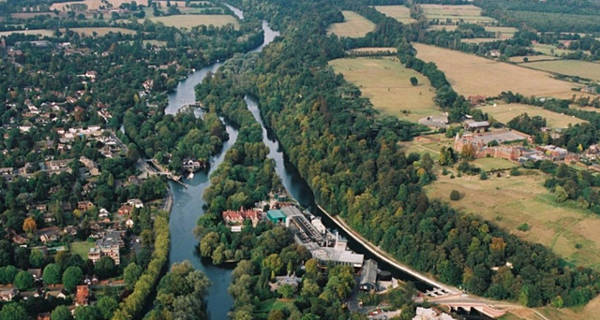 Taplow Reaches is home to a very wide variety of wild life but to take just birds and bats as an example there is a need to specially protect their breeding and nesting habitats, to look after the feeding grounds and try to ensure that development in the area leaves them reasonably secure. There is a huge insect population and massive fly hatches which provide a feast for the creatures of this area. Also it is an essential refuge from summer flooding and high winter water. To give you an idea of the diversity of the bird and bat population in the area there are several pairs of kingfishers, great crested grebe, moorhens, coots, scarce species of ducks, geese and swans. Several pairs of herons make their home there, as do tawny owls and cormorants. We have red kites visiting and no end of robins, tits, wagtails, thrushes, wrens, jays and woodpeckers. On the bat side there are Pipistrelle and Daubenton’s bats.
Of course this part of the river and its Jubilee offshoot provide a slack water area, which provides a safe nursery and an ideal breeding ground for many different species of fish, for instance (for the fishermen among our readers) pinhead fry can survive their first crucial winter here. It is from this haven that the wider river fish populations can renew. Amongst the fish identified here are barbel, chub, roach, dace, rudd, bream, gudgeon, bleak, carp, pike, perch, zander, catfish, salmanoids, trout and grayling.
On land the area is also home to deer, mice, badgers, foxes, grass snakes and adders. And in case you think this is not enough we also have significant mussel beds including swan mussels, zebra mussels, pea mussels and great freshwater snails can also be found. These mussel beds play an important role in the freshwater river ecosystem and the ‘keystone’ role that mussels play in these ecosystems. Local biota can also benefit from the mussels’ filtration, excretion, biodeposition and physical presence.
The Environment Agency maintains what is called a 'red data' book of endangered species, which lists a number of areas in the reaches from Boulter’s to Bray. The EA has stated that there is such a high level of biodiversity in these reaches that they must be protected. Your President, Eva Lipman, spent a great deal of time attempting to find some way of protecting these areas from developer depredations but unfortunately there seems to be little that can be done legally. The EA also maintains a Community Conservation Index (CCI), which summarises biodiversity and the comparative rarity of aquatic macroinvertibrates in the red data areas. The index offers a biodiversity rating scale in which 1-10 means no red data book species are present and 20+ means the site has a high ecological value. When the Thames at Boulter’s Lock was last surveyed in 2008, it merited a CCI rating of 32.12! The EA are concerned that no deterioration of the ecology shall occur yet it appears that, as stated above, there is no obvious legal way that the area can be protected against development.
The TRES has appealed to your Society for help in this upcoming struggle. We can only do this by helping to publicise the extreme value of this local biodiversity hotspot so that generations to come can enjoy this haven where once Wind in the Willows characters played out their little lives to our everlasting delight.
For those of you interested in preserving this area and wish to know more about it then please contact Des O’Sullivan at desio68@googlemail.com.
Taplow Reaches is home to a very wide variety of wild life but to take just birds and bats as an example there is a need to specially protect their breeding and nesting habitats, to look after the feeding grounds and try to ensure that development in the area leaves them reasonably secure. There is a huge insect population and massive fly hatches which provide a feast for the creatures of this area. Also it is an essential refuge from summer flooding and high winter water. To give you an idea of the diversity of the bird and bat population in the area there are several pairs of kingfishers, great crested grebe, moorhens, coots, scarce species of ducks, geese and swans. Several pairs of herons make their home there, as do tawny owls and cormorants. We have red kites visiting and no end of robins, tits, wagtails, thrushes, wrens, jays and woodpeckers. On the bat side there are Pipistrelle and Daubenton’s bats.
Of course this part of the river and its Jubilee offshoot provide a slack water area, which provides a safe nursery and an ideal breeding ground for many different species of fish, for instance (for the fishermen among our readers) pinhead fry can survive their first crucial winter here. It is from this haven that the wider river fish populations can renew. Amongst the fish identified here are barbel, chub, roach, dace, rudd, bream, gudgeon, bleak, carp, pike, perch, zander, catfish, salmanoids, trout and grayling.
On land the area is also home to deer, mice, badgers, foxes, grass snakes and adders. And in case you think this is not enough we also have significant mussel beds including swan mussels, zebra mussels, pea mussels and great freshwater snails can also be found. These mussel beds play an important role in the freshwater river ecosystem and the ‘keystone’ role that mussels play in these ecosystems. Local biota can also benefit from the mussels’ filtration, excretion, biodeposition and physical presence.
The Environment Agency maintains what is called a 'red data' book of endangered species, which lists a number of areas in the reaches from Boulter’s to Bray. The EA has stated that there is such a high level of biodiversity in these reaches that they must be protected. Your President, Eva Lipman, spent a great deal of time attempting to find some way of protecting these areas from developer depredations but unfortunately there seems to be little that can be done legally. The EA also maintains a Community Conservation Index (CCI), which summarises biodiversity and the comparative rarity of aquatic macroinvertibrates in the red data areas. The index offers a biodiversity rating scale in which 1-10 means no red data book species are present and 20+ means the site has a high ecological value. When the Thames at Boulter’s Lock was last surveyed in 2008, it merited a CCI rating of 32.12! The EA are concerned that no deterioration of the ecology shall occur yet it appears that, as stated above, there is no obvious legal way that the area can be protected against development.
The TRES has appealed to your Society for help in this upcoming struggle. We can only do this by helping to publicise the extreme value of this local biodiversity hotspot so that generations to come can enjoy this haven where once Wind in the Willows characters played out their little lives to our everlasting delight.
For those of you interested in preserving this area and wish to know more about it then please contact Des O’Sullivan at desio68@googlemail.com.