
Archived Page
This page is no longer maintained.
For up-to-date information please see the
new website
My TV Times
Anthony Read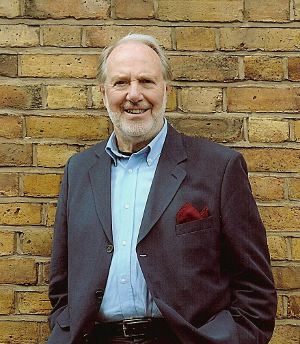 In 1963 I took up a three-month contract with BBC TV as a script editor, giving up a secure job as a publisher’s editor. I had also been working as a freelance journalist – I had been hired as theatre critic by a new magazine called Scene but my first review was so awful that they switched me to writing features and gave the job to another young hopeful called Tom Stoppard. And like so many others I had been frantically writing TV scripts ‘on spec’, until I scored at the BBC with a one-off play. I was thrilled to be given a cast led by Michael Hordern, supported by Donald Churchill and June Barry. I even got a good review from the Daily Herald TV critic, Dennis Potter.
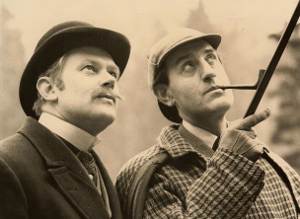
Somehow, my three-month contract with the BBC stretched to ten years. I started with a series called Detective dramatizations of classic detective stories. They were intended as pilots, and we got three or four series from them, including Sherlock Holmes, which I edited, starting a lifetime’s connection with Conan Doyle’s hero.
In 1963 I took up a three-month contract with BBC TV as a script editor, giving up a secure job as a publisher’s editor. I had also been working as a freelance journalist – I had been hired as theatre critic by a new magazine called Scene but my first review was so awful that they switched me to writing features and gave the job to another young hopeful called Tom Stoppard. And like so many others I had been frantically writing TV scripts ‘on spec’, until I scored at the BBC with a one-off play. I was thrilled to be given a cast led by Michael Hordern, supported by Donald Churchill and June Barry. I even got a good review from the Daily Herald TV critic, Dennis Potter.
Somehow, my three-month contract with the BBC stretched to ten years. I started with a series called Detective dramatizations of classic detective stories. They were intended as pilots, and we got three or four series from them, including Sherlock Holmes, which I edited, starting a lifetime’s connection with Conan Doyle’s hero.
 Following Holmes, I was given the task of dramatizing Rudyard Kipling’s Indian short stories. I devised a format which interleaved two or more Kipling stories, linked by a newspaper editor in Lahore, played by Joss Ackland, and a young reporter.
Kipling was a happy series to work on, despite two main problems. In those days BBC drama never indulged in overseas filming, so we never got to India, but had to mock up scenes in Ealing or rural Surrey. The other drawback was that there were virtually no Indian actors in Britain. I have vivid memories of, among others, Warren Mitchell as an Indian conman, Nyree Dawn Porter as a dusky courtesan and Alfred Burke as a villainous Pathan tribesman.
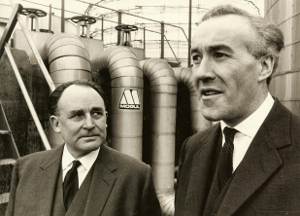
After twenty-six episodes of Kipling I found a new challenge in a series about a fictitious oil company called Mogul, with a new producer, Peter Graham Scott. Instead of a single pilot, we were given a trial run of thirteen programmes for the summer of 1965. We cast Geoffrey Keen as the managing director, Philip Latham as company secretary, backed up by Ray Barrett and Barry Foster as thrusting younger executives. In later series, we replaced Barry Foster with the smoother Robert Hardy.
The big oil interest in 1965 centred on exploration in the North Sea. There was no guarantee that oil or gas would be found, but we took a chance and made our opening episode the story of Mogul making a successful strike. By happy chance, the week before transmission BP struck gas. It was a massive news story, and the first episode of Mogul went out in a huge blaze of publicity. So was born a reputation for foretelling events that stayed with us throughout 136 episodes.
Mogul was a great success, and we were told to go ahead with a full run of twenty-six episodes, but under a different title. It was felt that ‘Mogul’ was too easily confused with ‘Mongol’. Reluctantly, we came up with The Troubleshooters.To fill in the few weeks’ gap between Mogul and The Troubleshooters, the BBC sent Peter and me to Glasgow, to set up BBC Scotland’s first network series. The result, This Man Craig , was set in a Scottish comprehensive school (years before Grange Hill and decades before Waterloo Road). It was also the first drama series for the new BBC2 channel, under first Michael Peacock and then David Attenborough. I remember Michael looking at my format and saying: ‘Yes. I like it. You’re on air in six weeks.’ And of course, we were.
Commuting between London and Glasgow meant life was pretty hectic. It was made even more so when Peter Graham Scott left to direct a movie, and I took his place as producer, while still remaining as script editor. Having lined up my writing team, I set about hiring directors – among them a former designer called Ridley Scott, who turned out to be very promising.
Making 26 hour-long episodes at a rate of one per week, with a front office staff of myself and a secretary (who for a brief period was a temp called Ginny Miall), was the most stressful experience imaginable. But somehow we survived – and were rewarded with that year’s BAFTA for best series.
Following Holmes, I was given the task of dramatizing Rudyard Kipling’s Indian short stories. I devised a format which interleaved two or more Kipling stories, linked by a newspaper editor in Lahore, played by Joss Ackland, and a young reporter.
Kipling was a happy series to work on, despite two main problems. In those days BBC drama never indulged in overseas filming, so we never got to India, but had to mock up scenes in Ealing or rural Surrey. The other drawback was that there were virtually no Indian actors in Britain. I have vivid memories of, among others, Warren Mitchell as an Indian conman, Nyree Dawn Porter as a dusky courtesan and Alfred Burke as a villainous Pathan tribesman.
After twenty-six episodes of Kipling I found a new challenge in a series about a fictitious oil company called Mogul, with a new producer, Peter Graham Scott. Instead of a single pilot, we were given a trial run of thirteen programmes for the summer of 1965. We cast Geoffrey Keen as the managing director, Philip Latham as company secretary, backed up by Ray Barrett and Barry Foster as thrusting younger executives. In later series, we replaced Barry Foster with the smoother Robert Hardy.
The big oil interest in 1965 centred on exploration in the North Sea. There was no guarantee that oil or gas would be found, but we took a chance and made our opening episode the story of Mogul making a successful strike. By happy chance, the week before transmission BP struck gas. It was a massive news story, and the first episode of Mogul went out in a huge blaze of publicity. So was born a reputation for foretelling events that stayed with us throughout 136 episodes.
Mogul was a great success, and we were told to go ahead with a full run of twenty-six episodes, but under a different title. It was felt that ‘Mogul’ was too easily confused with ‘Mongol’. Reluctantly, we came up with The Troubleshooters.To fill in the few weeks’ gap between Mogul and The Troubleshooters, the BBC sent Peter and me to Glasgow, to set up BBC Scotland’s first network series. The result, This Man Craig , was set in a Scottish comprehensive school (years before Grange Hill and decades before Waterloo Road). It was also the first drama series for the new BBC2 channel, under first Michael Peacock and then David Attenborough. I remember Michael looking at my format and saying: ‘Yes. I like it. You’re on air in six weeks.’ And of course, we were.
Commuting between London and Glasgow meant life was pretty hectic. It was made even more so when Peter Graham Scott left to direct a movie, and I took his place as producer, while still remaining as script editor. Having lined up my writing team, I set about hiring directors – among them a former designer called Ridley Scott, who turned out to be very promising.
Making 26 hour-long episodes at a rate of one per week, with a front office staff of myself and a secretary (who for a brief period was a temp called Ginny Miall), was the most stressful experience imaginable. But somehow we survived – and were rewarded with that year’s BAFTA for best series.
 The Troubleshooters played a central role in my life for seven frantic years. Since it was an international series, we needed to do at least some filming overseas, though we still had only a standard BBC budget. We devised ways of coping with this by using the most skeletal crews to shoot inserts featuring one or at most two actors in places like Hong Kong, Africa, Thailand and India.
Inevitably there were some hairy moments, but mostly things ran fairly smoothly. One exception was when we had been filming in Kenya. On our last evening, Ray Barrett inadvertently upset the Kenyan vice-president, who was staying in our hotel in Mombasa. The vice-president exploded in rage, shouting that he had been insulted. Enormous security men toting sub-machine guns suddenly appeared and started to drag poor Ray away. I was told that he would be taken outside, roughed up, and shot ‘while trying to escape’, and that there was nothing I, or the BBC, or the British government could do about it.
When I tried to intervene I had the muzzle of a loaded sub-machine gun rammed into my stomach – something that does terrible things to your digestive system.
Talking faster than I have ever done in my life, I managed to persuade the vice-president not to have Ray shot immediately. Instead he was locked in his room under armed guard, while I spent five long hours sitting on a bar stool pleading for his life. At 5.0 am, the vice-president was reminded that he was due at the airport that morning with President Kenyatta, to greet President Tito of Yugoslavia. By now, he had finally calmed down. We shook hands and he went to his room.We flew out next afternoon, after a jittery day by the hotel pool.
Back in London, I reported the incident to David Attenborough, who was then director of programmes, to alert any BBC personnel visiting Kenya. David’s reaction was typically un-pompous: ‘My God,’ he exclaimed, ‘I would have s**t myself!’
Even before we had finished making Troubleshooters, I was already at work on my next project, a series about expatriates on a Mediterranean island. The Lotus Eaters was set in Majorca, where the author, Michael J. Bird, had lived some years before.
I liked the idea, and the script, but not the setting. After a great deal of agonising, I thought of Greece. Michael Bird was not happy. He had never been to Greece and knew little about it. So I took him to Crete, to do a recce. Within half an hour of landing at Heraklion, he was hooked. And by the time we drove into the then little known resort of Aghios Nikolaos next morning, he was busy pointing out where all our settings would be.
Back home, I chose as lead actors Ian Hendry, who had been my best buddy at drama school, and Wanda Ventham, who had played the MD’s daughter in The Troubleshooters (when, incidentally, my daughters Emma and Amelia played her children). The Lotus Eaters turned out to be fraught with problems, some technical, some political. The Sixties were over – and it showed. Producers no longer had the freedom we had enjoyed for so long, and the fun was disappearing from the job. I felt that the time had come to move on.
The Troubleshooters played a central role in my life for seven frantic years. Since it was an international series, we needed to do at least some filming overseas, though we still had only a standard BBC budget. We devised ways of coping with this by using the most skeletal crews to shoot inserts featuring one or at most two actors in places like Hong Kong, Africa, Thailand and India.
Inevitably there were some hairy moments, but mostly things ran fairly smoothly. One exception was when we had been filming in Kenya. On our last evening, Ray Barrett inadvertently upset the Kenyan vice-president, who was staying in our hotel in Mombasa. The vice-president exploded in rage, shouting that he had been insulted. Enormous security men toting sub-machine guns suddenly appeared and started to drag poor Ray away. I was told that he would be taken outside, roughed up, and shot ‘while trying to escape’, and that there was nothing I, or the BBC, or the British government could do about it.
When I tried to intervene I had the muzzle of a loaded sub-machine gun rammed into my stomach – something that does terrible things to your digestive system.
Talking faster than I have ever done in my life, I managed to persuade the vice-president not to have Ray shot immediately. Instead he was locked in his room under armed guard, while I spent five long hours sitting on a bar stool pleading for his life. At 5.0 am, the vice-president was reminded that he was due at the airport that morning with President Kenyatta, to greet President Tito of Yugoslavia. By now, he had finally calmed down. We shook hands and he went to his room.We flew out next afternoon, after a jittery day by the hotel pool.
Back in London, I reported the incident to David Attenborough, who was then director of programmes, to alert any BBC personnel visiting Kenya. David’s reaction was typically un-pompous: ‘My God,’ he exclaimed, ‘I would have s**t myself!’
Even before we had finished making Troubleshooters, I was already at work on my next project, a series about expatriates on a Mediterranean island. The Lotus Eaters was set in Majorca, where the author, Michael J. Bird, had lived some years before.
I liked the idea, and the script, but not the setting. After a great deal of agonising, I thought of Greece. Michael Bird was not happy. He had never been to Greece and knew little about it. So I took him to Crete, to do a recce. Within half an hour of landing at Heraklion, he was hooked. And by the time we drove into the then little known resort of Aghios Nikolaos next morning, he was busy pointing out where all our settings would be.
Back home, I chose as lead actors Ian Hendry, who had been my best buddy at drama school, and Wanda Ventham, who had played the MD’s daughter in The Troubleshooters (when, incidentally, my daughters Emma and Amelia played her children). The Lotus Eaters turned out to be fraught with problems, some technical, some political. The Sixties were over – and it showed. Producers no longer had the freedom we had enjoyed for so long, and the fun was disappearing from the job. I felt that the time had come to move on.
 To see out my contract, I made a four-part series, The Dragon’s Opponent, the moving story of Lord ‘Mad Jack’ Suffolk, who was killed defusing German bombs in the second world war. Peter Duncan, later of Blue Peter and Chief Scout fame, played Suffolk as a boy, with Ronald Pickup as the adult hero and Virginia McKenna as his mother.
So, in the autumn of 1973, I left the BBC and plunged into the precarious life of a freelance writer. Five years later, after writing another single play and scripts for series including Z-Cars, Shoestring, Quiller, The Omega Factor, the opening episodes of The Professionals and the final series of Sapphire and Steel, I was tempted back to the BBC to edit Dr Who, with Tom Baker.
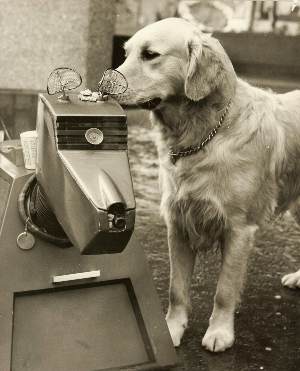
My team of writers was a mix of old Dr Who hands and new talent. One of the old hands was a lively Bristolian called Bob Baker, who has since won plaudits as the writer of Wallace and Gromit. The new talent included a bright young man who had never written for television, but was then developing a sci-fi series for radio. I read the draft scripts of The Hitchhikers’ Guide to the Galaxy, then called Douglas Adams in and commissioned a four-part Dr Who. What he delivered was technically hopeless, but fizzing with brilliant ideas. When I left at the end of the series, Douglas took over from me as script editor.
I had enjoyed my two years on Dr Who enormously, but it was time to get back to my typewriter. I returned briefly to script editing with an enjoyable stint creating Hammer House of Horror, but then started a new career as an author of serious non-fiction history books. Over the next 25 years I published ten books in London and New York and various other countries. Meanwhile, I also managed to write more than 200 TV scripts, in every area of drama apart from ‘soaps’, before moving on to another new career as a children’s author with a series of books called The Baker Street Boys.
But that’s another story …
To see out my contract, I made a four-part series, The Dragon’s Opponent, the moving story of Lord ‘Mad Jack’ Suffolk, who was killed defusing German bombs in the second world war. Peter Duncan, later of Blue Peter and Chief Scout fame, played Suffolk as a boy, with Ronald Pickup as the adult hero and Virginia McKenna as his mother.
So, in the autumn of 1973, I left the BBC and plunged into the precarious life of a freelance writer. Five years later, after writing another single play and scripts for series including Z-Cars, Shoestring, Quiller, The Omega Factor, the opening episodes of The Professionals and the final series of Sapphire and Steel, I was tempted back to the BBC to edit Dr Who, with Tom Baker.
My team of writers was a mix of old Dr Who hands and new talent. One of the old hands was a lively Bristolian called Bob Baker, who has since won plaudits as the writer of Wallace and Gromit. The new talent included a bright young man who had never written for television, but was then developing a sci-fi series for radio. I read the draft scripts of The Hitchhikers’ Guide to the Galaxy, then called Douglas Adams in and commissioned a four-part Dr Who. What he delivered was technically hopeless, but fizzing with brilliant ideas. When I left at the end of the series, Douglas took over from me as script editor.
I had enjoyed my two years on Dr Who enormously, but it was time to get back to my typewriter. I returned briefly to script editing with an enjoyable stint creating Hammer House of Horror, but then started a new career as an author of serious non-fiction history books. Over the next 25 years I published ten books in London and New York and various other countries. Meanwhile, I also managed to write more than 200 TV scripts, in every area of drama apart from ‘soaps’, before moving on to another new career as a children’s author with a series of books called The Baker Street Boys.
But that’s another story …