
Archived Page
This page is no longer maintained.
For up-to-date information please see the
new website
Hitcham and Taplow Recreation Grounds
To many, the piece of land off Boundary Road where the Scout and Guide Huts are situated - and which looks like an old gravel pit - is a bit of a mystery. Who owns it and how has it survived the greedy hands of the developers? You may be interested to know that, long before the Green Belt policy came into force, a number of local residents bought the land out of their own pockets and deliberately set it aside to provide a buffer against excessive urban development into Taplow and Hitcham. At that time, the derelict piece of land lay between Burnham and Taplow in a very strategic location, which was going to be developed as a caravan site. There were seven original subscribers, including Mr JE Martineau, who was elected Chairman of the new Taplow and Hitcham Recreation Grounds Association. Other subscribers included Mr Ernest Perkins, after whom the committee room in the Village Centre was named, and Miss EV Matthews, later to become Mrs Eileen Law, who was also the President and driving force behind the Taplow Horse Show until her death a few years ago. At the second meeting Mr John Page, later Sir John, was also appointed. Members of the public were invited to join the Association either as life members, for a fee of not less than £50, followed by £5 annually and £100 to be left in their will as a deed of covenant, or as ordinary members for an initial subscription of one guinea. The first meeting of the Taplow & Hitcham Recreation Grounds Association was held on 14th March 1956. Even in those days, there was much concern about the urban sprawl of London heading into the countryside and about Slough and Burnham overwhelming the parishes of Taplow and Hitcham. This was a time before the Green Belt had been established and when the prevention of urban development was in the hands of the public rather than the politicians. The Association felt that by preventing this strategically placed piece of land from being developed they might stop the urban sprawl extending to the villages of Taplow and Hitcham and thereby destroying their identity. In this they undoubtedly succeeded. Over the next few years, the Association proposed the construction of Scout and Guide Huts on the Grounds and talked about improving the quality of the land by planting grass seed in order to make it more accessible to the general public. Part of the site (now leased to Phoenix & Claires Court Sports Association) was originally leased to Flexello Castings & Wheels Ltd and, to many people today, Flexello is still the name applied to the land. However, all these ideas about improving the site were put on hold in 1959 when the County Council approached the Association with a proposal to extract gravel from the Grounds, which would benefit the Association to the tune of over £10,000, no doubt a very large sum of money at the time. After much soul-searching, this work was approved and was carried out in 1960, with the gravel being used to help build the new M4 motorway. By 1961, the gravel extraction was complete and the Association considerably richer for it. Thus they were able to repay some of the interest-free loans and return to their plans to landscape the area and construct the Scout and Guide huts. At this point the founder members chose to forego the money due to them from the proceeds of the gravel extraction. Instead they left the money in the Association to be used 'for the maintenance of a recreation ground for the use of the inhabitants of the ecclesiastical parishes of Taplow and Hitcham and, if appropriate, for charitable purposes within the said ecclesiastical parishes'. As a result of their generosity, the Association has been able to maintain the Grounds ever since without recourse to further subscriptions or loans and, with good financial management, this situation should continue for the foreseeable future.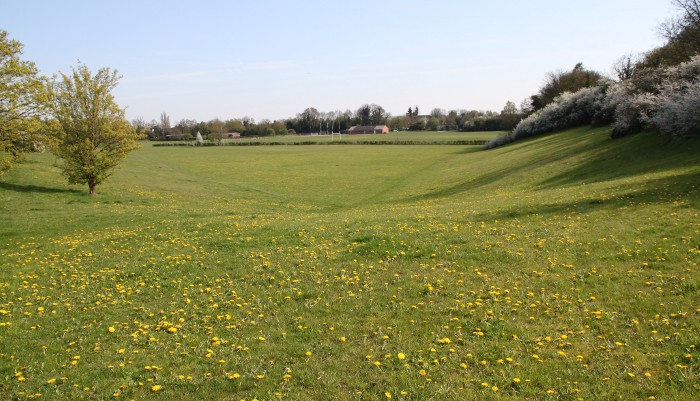 Today the Association continues to be run by a Council of Management, which meets twice a year and is made up of local people. In addition we have a smaller Executive Committee, which meets whenever necessary to deal with any urgent matters which arise between the main meetings.
Our main activities relate to the management of the Association’s finances and the maintenance of the Recreation Ground, which is used quite extensively by local people and was particularly popular for sledging after the heavy snowfalls we experienced earlier this year. Our biggest concern in recent years has been the illegal invasion of the Grounds by travellers, who cause damage by forceful entry and leave a lot of rubbish behind. In recent years the local police have been very prompt in evicting these unwelcome visitors and, since we built the bund along the Boundary Road perimeter, this problem has diminished.
On the charitable front, we have been able to award grants or loans to a number of local charitable organisations plus St Nicolas’ School and the St Nicolas' and St Mary’s churches. In 1987, for example, the Association paid for the electrification of the clock in St Nicolas’ church.
The Recreation Grounds are as relevant today as they were when they were first established over 50 years ago. As the demand for housing in this area continues to grow, the pressure on using land for urban development is greater than ever but, at the same time, the need for open spaces for recreation is equally important. It is nice to know that one open space in our parish will remain for the benefit of the community indefinitely.
Alistair Forsyth, Chairman THRGA
Today the Association continues to be run by a Council of Management, which meets twice a year and is made up of local people. In addition we have a smaller Executive Committee, which meets whenever necessary to deal with any urgent matters which arise between the main meetings.
Our main activities relate to the management of the Association’s finances and the maintenance of the Recreation Ground, which is used quite extensively by local people and was particularly popular for sledging after the heavy snowfalls we experienced earlier this year. Our biggest concern in recent years has been the illegal invasion of the Grounds by travellers, who cause damage by forceful entry and leave a lot of rubbish behind. In recent years the local police have been very prompt in evicting these unwelcome visitors and, since we built the bund along the Boundary Road perimeter, this problem has diminished.
On the charitable front, we have been able to award grants or loans to a number of local charitable organisations plus St Nicolas’ School and the St Nicolas' and St Mary’s churches. In 1987, for example, the Association paid for the electrification of the clock in St Nicolas’ church.
The Recreation Grounds are as relevant today as they were when they were first established over 50 years ago. As the demand for housing in this area continues to grow, the pressure on using land for urban development is greater than ever but, at the same time, the need for open spaces for recreation is equally important. It is nice to know that one open space in our parish will remain for the benefit of the community indefinitely.
Alistair Forsyth, Chairman THRGA