
Archived Page
This page is no longer maintained.
For up-to-date information please see the
new website
Our Gasometer
There used to be a gas works on the river side of Mill Lane. The old boundary wall is all that remains, together with the few buildings which today comprise the Maidenhead Sea Cadets' training ship Iron Duke. The first town lit by gas was Preston, in 1816. In 1834, WB Stears built the Maidenhead works, which became becoming the Maidenhead Gas Light & Coke Company in 1835. The works were built on the river because the coal from which the gas was extracted came by barge. Barge delivery continued until 1940, replaced by lorries shuttling from Taplow railway station. The 1875 OS map shows Mill Road running straight and parallel to the river. (It became Mill Lane some time between 1948 and 1952.) The original gasworks were squeezed between the road and the river. In 1898 the company added new plant to make carburetted water gas (CWG), an 1875 invention which improved quality by injecting light petroleum oils into the gas given off by the incandescent coking bed. In 1903 a new retort house was built, doubling the works' output. One or both of these expansions put the bend in Mill Lane, its new course first mapped in the OS map of 1910.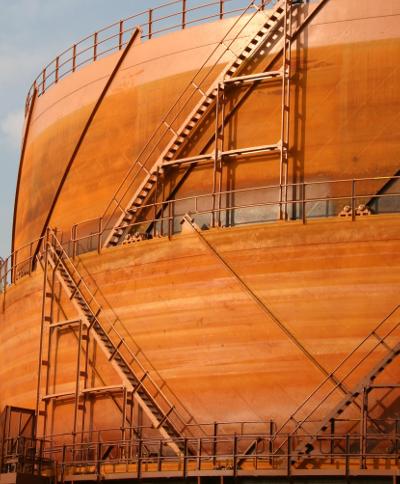 The earliest known output figure is 63 million cubic feet, in 1900. This rose to 100m in 1910, 169m in 1922, and finally 250m in 1949, the last year of regular gas production at Mill Lane, though the CWG plant was kept mothballed, ready for winter emergencies, until 1954.
The works were connected to Slough in 1947, and the present gas holder on the east side of Mill Lane was built some time between 1957 and 1967. Natural (North Sea) gas started coming ashore in 1967, and the country was wholly converted from town gas by 1977.
The Maidenhead Gas Light & Coke Company's name survived until 1876, when it became the Maidenhead Gas Co. by statute, probably conferring monopoly privileges: the early gas industry was fragmented and inefficient, addressed if not remedied first by mid-Victorian regulation and then by twentieth-century consolidation. Indeed, the original Maidenhead company survived what one unidentified source described as a 'strong threat from Consumers Organisation in 1863 to secure the act of parliament required to set up a rival company', almost certainly a revolt to do with gas quality or metering, though it evidently failed.
Maidenhead Gas Co. took over the failed Burnham United Gas Lighting & Coke Co. in 1904, and in 1925 was itself taken over by the Uxbridge, Wycombe & District Gas Co. The South Eastern Gas Corporation was formed in 1932 specifically to acquire concerns across the region, and swallowed the Uxbridge in 1936. The whole industry in England, Scotland and Wales was nationalised by the 1948 Gas Act. Maidenhead came under the North Thames Gas Board in 1949, which promptly stood the works down but for the CWG mothballing.
Today, there is talk that the gas holder might disappear with the redevelopment of Mill Lane, but the boundary wall which dates from around 1900 may yet see us all out. Bucks County Council's Taplow Riverside Conservation Area Character Appraisal of 2007 describes it as 'a positive feature' and its restoration as 'highly desirable'.
Adam Smith
The earliest known output figure is 63 million cubic feet, in 1900. This rose to 100m in 1910, 169m in 1922, and finally 250m in 1949, the last year of regular gas production at Mill Lane, though the CWG plant was kept mothballed, ready for winter emergencies, until 1954.
The works were connected to Slough in 1947, and the present gas holder on the east side of Mill Lane was built some time between 1957 and 1967. Natural (North Sea) gas started coming ashore in 1967, and the country was wholly converted from town gas by 1977.
The Maidenhead Gas Light & Coke Company's name survived until 1876, when it became the Maidenhead Gas Co. by statute, probably conferring monopoly privileges: the early gas industry was fragmented and inefficient, addressed if not remedied first by mid-Victorian regulation and then by twentieth-century consolidation. Indeed, the original Maidenhead company survived what one unidentified source described as a 'strong threat from Consumers Organisation in 1863 to secure the act of parliament required to set up a rival company', almost certainly a revolt to do with gas quality or metering, though it evidently failed.
Maidenhead Gas Co. took over the failed Burnham United Gas Lighting & Coke Co. in 1904, and in 1925 was itself taken over by the Uxbridge, Wycombe & District Gas Co. The South Eastern Gas Corporation was formed in 1932 specifically to acquire concerns across the region, and swallowed the Uxbridge in 1936. The whole industry in England, Scotland and Wales was nationalised by the 1948 Gas Act. Maidenhead came under the North Thames Gas Board in 1949, which promptly stood the works down but for the CWG mothballing.
Today, there is talk that the gas holder might disappear with the redevelopment of Mill Lane, but the boundary wall which dates from around 1900 may yet see us all out. Bucks County Council's Taplow Riverside Conservation Area Character Appraisal of 2007 describes it as 'a positive feature' and its restoration as 'highly desirable'.
Adam Smith