Archived Page
This page is no longer maintained.
For up-to-date information please see the
new website
Bless this House
An adaptation by Nigel Smales from his exhibit All Our Yesterdays at the Taplow Heritage Day. Nigel will be expanding the contents of his exhibit in an illustrated talk at the Society's AGM on 29 October at the Village Centre. Taplow used to be a much thirstier place. In the late 1800s, its 1,000 souls could find refreshment in any of seven hostelries without staggering from the parish. Our village predecessors enjoyed this wealth of liquid opportunity until well into the 20th century, but then they started to multiply. Strangely, the more they multiplied, the less thirsty they became. Now there are some 1,700 of us, and we are down to just three pubs, two of them really restaurants. What can we do but drown our sorrows on a Taplow pub crawl, circa 1880....? We start outside the gates of Cliveden, the country seat of Hugh Grosvenor, Duke of Westminster. The Feathers Inn dates from around 1780 but was first licensed in the 1870s. Its name recalls the coat of arms of the Prince of Wales, but which one? We’ve heard that Queen Victoria’s son and heir, Edward, often pops in for a pint with his friend Hugh. If we see Bertie (as the Prince’s pals call him), we’ll ask whether his patronage inspired the pub’s name or if the link goes way back to his predecessor, the ill-fated Frederick, son of King George II, who lived at Cliveden from 1739 until his untimely death in 1751.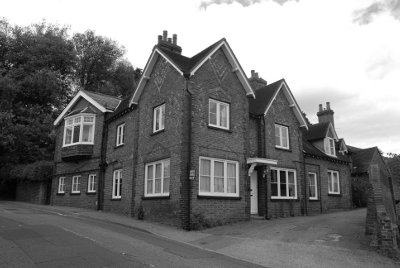 Fortified by our first bevy, we wend our way south to our next port of call, The Queen’s Head, built around 1710 on the foundations of a 15th-century cottage. The name recalls the royal retinue’s residence during Queen Anne’s stay at Taplow Court with George Hamilton, Duke of Orkney, who in 1705 had fought so courageously at the Battle of Blenheim alongside his friend John Churchill, Duke of Marlborough. We hear about the Maidenhead brewers John & Henry Langton, who took over the pub in 1825 when Bath Road coaches would climb Berry Hill (then Town Lane) to stop overnight.
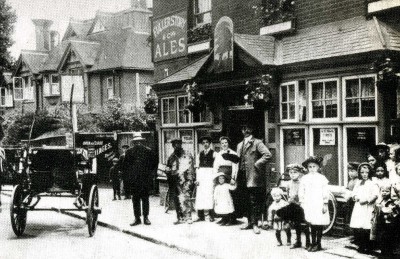 It’s a short walk along Church Lane (now Rectory Road) to The Oak & Saw, where we ponder why this is the only pub in the country of that name. The pub’s sign hints at the secret. The oak tree, ship and saw reflect devices in the Orkney coat of arms which themselves are a reminder that the enterprising Earl arranged for damaged ships to be towed upriver to be broken up for salvage. This little patch of Taplow is evidence that his heirs carried on the tradition. Salvaged ships’ timbers were used to build The Cottage and Farm View in 1756, and a row of five cottages nearby around 1770. In 1852, James Bell of Ray Mill paid the princely sum of £610 for this group of timber-framed cottages. Soon afterwards, three of the five cottages were converted to become The Oak & Saw, and the others became The Old Manor House next door. As we sup our pints of porter, we look up at the wooden beams around us and imagine them seeing service in the 1704 capture of Gibraltar, the 1739 War of Jenkin’s Ear, or some other thrilling maritime adventure.
It’s not far to our next watering hole. The Old Friend awaits us just a few paces to the east. Its 18th-century timber outbuilding reminds us of the old cottage that was replaced in the 1840s by a beer shop, The Oak. With a pewter mug of frothy ale in hand, we ask about Henry Darvill of Windsor paying £610 for the shop and its land in 1852. We chuckle at the thought of The Oak and The Oak & Saw almost side-by-side in the 1860s, and see why The Oak became The Old Friend as it grew up to be a proper pub.
It’s a short walk along Church Lane (now Rectory Road) to The Oak & Saw, where we ponder why this is the only pub in the country of that name. The pub’s sign hints at the secret. The oak tree, ship and saw reflect devices in the Orkney coat of arms which themselves are a reminder that the enterprising Earl arranged for damaged ships to be towed upriver to be broken up for salvage. This little patch of Taplow is evidence that his heirs carried on the tradition. Salvaged ships’ timbers were used to build The Cottage and Farm View in 1756, and a row of five cottages nearby around 1770. In 1852, James Bell of Ray Mill paid the princely sum of £610 for this group of timber-framed cottages. Soon afterwards, three of the five cottages were converted to become The Oak & Saw, and the others became The Old Manor House next door. As we sup our pints of porter, we look up at the wooden beams around us and imagine them seeing service in the 1704 capture of Gibraltar, the 1739 War of Jenkin’s Ear, or some other thrilling maritime adventure.
It’s not far to our next watering hole. The Old Friend awaits us just a few paces to the east. Its 18th-century timber outbuilding reminds us of the old cottage that was replaced in the 1840s by a beer shop, The Oak. With a pewter mug of frothy ale in hand, we ask about Henry Darvill of Windsor paying £610 for the shop and its land in 1852. We chuckle at the thought of The Oak and The Oak & Saw almost side-by-side in the 1860s, and see why The Oak became The Old Friend as it grew up to be a proper pub.
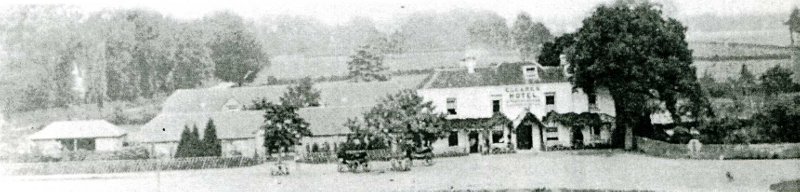
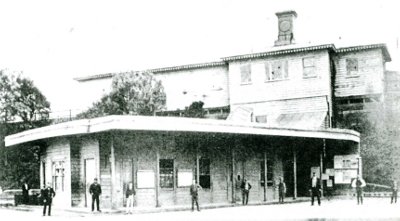 With half a gallon of refreshment inside us, we make our merry way down the footpath across the fields to the bottom end of Town Lane and a tricky decision. Should we first sample the delights of Cleare’s Hotel, or those of The Old Station Inn across the Bath Road? The latter was built in 1838 as Maidenhead Riverside Station, briefly the western terminus of the Great Western Railway. As we sip our pale ale, we hear how it was converted to a pub in 1871 when the new Taplow Station opened half a mile up the line. Then we nip over to its grander neighbour, a 1780s coaching inn owned and run since 1842 by the local farmer, Richard Cleare. As we listen to his tales of the days when horse-drawn carriages would meet trains to take passengers on to Maidenhead, we close our eyes and somehow sense that, on his death in 1888, his hotel will be renamed The Dumb Bell in recollection of the silent bell in the disused station. We marvel at the insight in that sixth ale.
Tempting as it is to linger longer, we stagger valiantly onwards towards Maidenhead Bridge and our final destination, The Orkney Arms. Taplow’s original Bath Road coaching inn, built in 1743, has been in the hands of the enterprising William Skindle since 1873. He regales us with his ambitious plans to build a hotel on the adjacent riverfront, a fashionable rendezvous for royalty, the aristocracy, the successful, those who want to see and be seen, and those who should know better, any and all of whom will enjoy naughty escapades such as champagne luncheons on the Thames and sleeping them off together afterwards. In our slightly confused but happy state, we smile knowingly at Skindle’s impossible ideas and doze off wondering absently if someone has laced our seventh pint.
When we awake back in the 21st century, Skindles is sad and silent. Car showrooms have replaced The Orkney Arms and The Old Station Inn, and nudged The Dumb Bell eastwards to life as a Harvester restaurant. The Old Friend has long gone, replaced by Priory Cottage. The Queen’s Head is a private residence, Queen Anne’s House. The Feathers Inn and The Oak and Saw have survived intact, the former reborn as a restaurant, the latter Taplow’s last true pub. Where did it all go wrong? Anyone fancy one for the road?
Nigel Smales
With half a gallon of refreshment inside us, we make our merry way down the footpath across the fields to the bottom end of Town Lane and a tricky decision. Should we first sample the delights of Cleare’s Hotel, or those of The Old Station Inn across the Bath Road? The latter was built in 1838 as Maidenhead Riverside Station, briefly the western terminus of the Great Western Railway. As we sip our pale ale, we hear how it was converted to a pub in 1871 when the new Taplow Station opened half a mile up the line. Then we nip over to its grander neighbour, a 1780s coaching inn owned and run since 1842 by the local farmer, Richard Cleare. As we listen to his tales of the days when horse-drawn carriages would meet trains to take passengers on to Maidenhead, we close our eyes and somehow sense that, on his death in 1888, his hotel will be renamed The Dumb Bell in recollection of the silent bell in the disused station. We marvel at the insight in that sixth ale.
Tempting as it is to linger longer, we stagger valiantly onwards towards Maidenhead Bridge and our final destination, The Orkney Arms. Taplow’s original Bath Road coaching inn, built in 1743, has been in the hands of the enterprising William Skindle since 1873. He regales us with his ambitious plans to build a hotel on the adjacent riverfront, a fashionable rendezvous for royalty, the aristocracy, the successful, those who want to see and be seen, and those who should know better, any and all of whom will enjoy naughty escapades such as champagne luncheons on the Thames and sleeping them off together afterwards. In our slightly confused but happy state, we smile knowingly at Skindle’s impossible ideas and doze off wondering absently if someone has laced our seventh pint.
When we awake back in the 21st century, Skindles is sad and silent. Car showrooms have replaced The Orkney Arms and The Old Station Inn, and nudged The Dumb Bell eastwards to life as a Harvester restaurant. The Old Friend has long gone, replaced by Priory Cottage. The Queen’s Head is a private residence, Queen Anne’s House. The Feathers Inn and The Oak and Saw have survived intact, the former reborn as a restaurant, the latter Taplow’s last true pub. Where did it all go wrong? Anyone fancy one for the road?
Nigel Smales