Archived Page
This page is no longer maintained.
For up-to-date information please see the
new website
The Gravel Terraces of Berry Hill
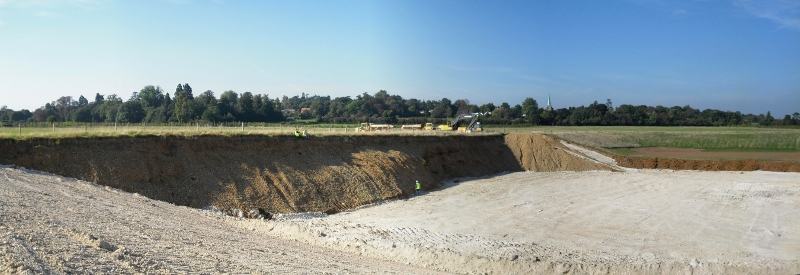
In September last year a select group including HTS President Eva Lipman and her husband Max donned hard hats and yellow jackets to join a geological exploration of the Berry Hill Gravel Quarry, clambering down into it to look at the still-exposed west face. The sands and gravels are of Quaternary age (the geological time period that extends from 2.6 million years ago to the present) and are assigned to the Taplow Gravel River Terrace. They are one of the youngest and lowest of the ten recognised Thames river terrace remnants, and were deposited between 130,000 to 190,000 years ago during ice-age conditions when the flow of the Thames was considerably stronger than it is today.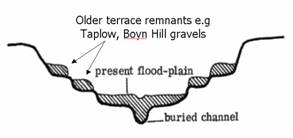 The Thames originally flowed to the north of its present bed and exited not in the present Thames estuary, but near Ipswich. From this time there have been a number of glacial and interglacial periods with the flows changing. When in spate, sand and gravel was deposited, and during periods of lesser flows, silt. During the Anglian glacial event, approximately 500,000 years ago, ice dammed the river in the area near St Albans, causing it to flow south to the present Thames valley. The river has repeatedly cut down into its bed, leaving the former flood plains as a series of stairway-like terraces along the valley sides.
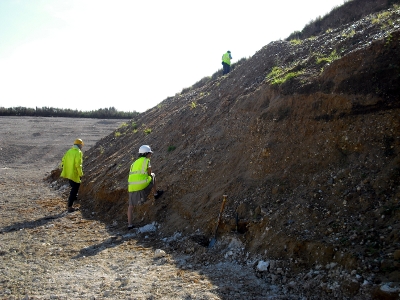 At the Berry Hill site the gravels rest on the chalk, and the boundary between them represents a substantial chunk of missing history. The chalk was deposited approximately 80 million years ago under marine conditions while the gravels were deposited less than 0.5 million years ago by the palaeo-Thames river.
On going up Berry Hill from the Bath Road, there is clear evidence of the two gravel terraces. The hill flattens out slightly near Berry Hill Farm, and the second terrace starts where Berry Hill becomes steeper again. These terraces retain water, while the silts between the gravel terraces are impermeable layers. This is the reason for the springs on the hill.
Graham Hickman
At the Berry Hill site the gravels rest on the chalk, and the boundary between them represents a substantial chunk of missing history. The chalk was deposited approximately 80 million years ago under marine conditions while the gravels were deposited less than 0.5 million years ago by the palaeo-Thames river.
On going up Berry Hill from the Bath Road, there is clear evidence of the two gravel terraces. The hill flattens out slightly near Berry Hill Farm, and the second terrace starts where Berry Hill becomes steeper again. These terraces retain water, while the silts between the gravel terraces are impermeable layers. This is the reason for the springs on the hill.
Graham Hickman