
Archived Page
This page is no longer maintained.
For up-to-date information please see the
new website
London Airports - The Future
With the current debacle at Terminal 5, it does not seem appropriate to discuss the merits or otherwise of a third runway at Heathrow. At the present time, while it seems clear the Government, British Airways and BAA would like to see a third runway – with possibly a sixth terminal at Heathrow - all the surrounding County and District Councils, together with many Action Groups, are strongly against any such development, primarily because of the inevitable increase in noise, damage to air quality, increase in emissions and further disturbance to the environment. Indeed one Action Group is seriously considering taking judicial action to try to prevent such a development. This is understandable when one considers the consequential infrastructure requirements that such a development would entail, leaving aside the destruction of property, etc. that such a runway and terminal would require to make way for such a development.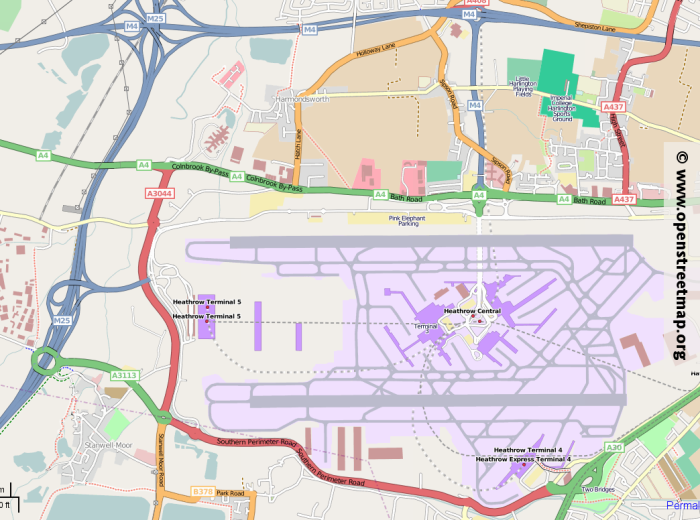 However, no decision has yet been reached – or announced - so maybe this is an appropriate time to consider some of the wider issues. Indeed, this is why I have chosen the title of this article to be as wide as possible. I am very mindful of the time in 1997/98 when I represented Hitcham and Taplow at the Terminal 5 Inquiry and it was our declared policy not to oppose the Terminal, but to do all we could to lessen the environmental impact that we saw coming. Our prime reason for taking this position was that we could see the economic advantages to the country of the fifth terminal expansion. Now those same arguments are being put forward again. However, I venture to suggest that the context is somewhat different today. To quote a former Labour minister, Nick Raynsford: 'Many people, like myself, accept the economic case for further capacity increases in the UK and particularly in the South East'. Note, not necessarily Heathrow. I am glad he went on to say he would want to see this implemented in the most sustainable and environmentally responsible way. He even went on to say this is impossible in the case of Heathrow.
Unfortunately these comments are not mirrored by his colleague Ruth Kelly, the Transport Secretary, who in referring to the problems that have been experienced at Terminal 5 said, 'After the delays and inconveniences suffered by many passengers it will play a vital role in helping Heathrow meet the increasing demand in the years ahead'. She went on - just as effusively - about expanding Heathrow, saying that an 'expanded Heathrow was vital for Britain’s economic interests'.
Frankly I think this whole issue has got to be thought through on a wider basis than simply expanding Heathrow, as I implied earlier.
While it is true we have, in aviation and economic terms, to maintain the 'London Hub', we have to remember the competition from aiports at Paris Charles de Gaulle, Schipol in Amsterdam and Frankfurt in Germany. This said, we must not overlook the current developments in this country with planned expansions at Stansted and possibly Gatwick, and increases in traffic from London City Airport, let alone the existing possible increase as a result of the opening of Terminal 5 at Heathrow. In saying this I am mindful of the fact that with the potential to cater for 700,000 flights and 120million passengers a year it is always going to impose a very big environmental cost on its neighbours.
It is important, therefore, before we consider increasing air traffic at existing airport locations, that we give serious thought to other airport developments, which could be both feasible and environmentally favourable. In the past thought was given to an airport development that could be approached over water, indeed the case for siting a new airport away from the main centres of population was made in 1960 with the ill-fated Maplin Sands. However, since then there was a half-hearted option of building an airport at Cliffe on the Hoo Peninsula in Kent. Some I am sure will remember the outcry from the bird-watching and bird-sanctuary community.
Today I believe we have a different situation and a society that is more far environmentally conscious. If we consider, for a start, the developments that have taken place and are scheduled to take place on the banks of the Thames Estuary (I am thinking particularly of all that has gone on at Canary Wharf and all the developments taking place/or planned in the Thames Gateway and the other developments arising from the 2012 Olympics), is it not possible to consider building an airport development within the Thames Estuary itself? Using land reclaimed from the sea is not new in airport developments internationally – Kansai in Japan and Hong Kong are two that come readily to mind. I do believe it is possible, feasible and highly advantageous to build an airport in the Thames Estuary. The technology is not a problem and placed correctly it would be relatively easy to construct fast road links to the motorways both north and south of the estuary. Think then of the benefit this would provide of easing the traffic congestion that is so much a part of the Heathrow picture, and which incidentally is very much part of the air-quality problem that exists there. Equally, a high-speed rail link could be established to London and the High Speed 1 service that runs through the Channel Tunnel.
Building a new airport such as this should not be seen as negating anything we have now: far from it. While the costs would be high, given the developments already referred to, such as the Thames Gateway, and considering that such costs could very well have a 30 to 40-year time frame, the real question we have to face is this: having regard to the economic, environmental and social interests of our country, can we afford not to proceed with such a development?
Derek Walker
However, no decision has yet been reached – or announced - so maybe this is an appropriate time to consider some of the wider issues. Indeed, this is why I have chosen the title of this article to be as wide as possible. I am very mindful of the time in 1997/98 when I represented Hitcham and Taplow at the Terminal 5 Inquiry and it was our declared policy not to oppose the Terminal, but to do all we could to lessen the environmental impact that we saw coming. Our prime reason for taking this position was that we could see the economic advantages to the country of the fifth terminal expansion. Now those same arguments are being put forward again. However, I venture to suggest that the context is somewhat different today. To quote a former Labour minister, Nick Raynsford: 'Many people, like myself, accept the economic case for further capacity increases in the UK and particularly in the South East'. Note, not necessarily Heathrow. I am glad he went on to say he would want to see this implemented in the most sustainable and environmentally responsible way. He even went on to say this is impossible in the case of Heathrow.
Unfortunately these comments are not mirrored by his colleague Ruth Kelly, the Transport Secretary, who in referring to the problems that have been experienced at Terminal 5 said, 'After the delays and inconveniences suffered by many passengers it will play a vital role in helping Heathrow meet the increasing demand in the years ahead'. She went on - just as effusively - about expanding Heathrow, saying that an 'expanded Heathrow was vital for Britain’s economic interests'.
Frankly I think this whole issue has got to be thought through on a wider basis than simply expanding Heathrow, as I implied earlier.
While it is true we have, in aviation and economic terms, to maintain the 'London Hub', we have to remember the competition from aiports at Paris Charles de Gaulle, Schipol in Amsterdam and Frankfurt in Germany. This said, we must not overlook the current developments in this country with planned expansions at Stansted and possibly Gatwick, and increases in traffic from London City Airport, let alone the existing possible increase as a result of the opening of Terminal 5 at Heathrow. In saying this I am mindful of the fact that with the potential to cater for 700,000 flights and 120million passengers a year it is always going to impose a very big environmental cost on its neighbours.
It is important, therefore, before we consider increasing air traffic at existing airport locations, that we give serious thought to other airport developments, which could be both feasible and environmentally favourable. In the past thought was given to an airport development that could be approached over water, indeed the case for siting a new airport away from the main centres of population was made in 1960 with the ill-fated Maplin Sands. However, since then there was a half-hearted option of building an airport at Cliffe on the Hoo Peninsula in Kent. Some I am sure will remember the outcry from the bird-watching and bird-sanctuary community.
Today I believe we have a different situation and a society that is more far environmentally conscious. If we consider, for a start, the developments that have taken place and are scheduled to take place on the banks of the Thames Estuary (I am thinking particularly of all that has gone on at Canary Wharf and all the developments taking place/or planned in the Thames Gateway and the other developments arising from the 2012 Olympics), is it not possible to consider building an airport development within the Thames Estuary itself? Using land reclaimed from the sea is not new in airport developments internationally – Kansai in Japan and Hong Kong are two that come readily to mind. I do believe it is possible, feasible and highly advantageous to build an airport in the Thames Estuary. The technology is not a problem and placed correctly it would be relatively easy to construct fast road links to the motorways both north and south of the estuary. Think then of the benefit this would provide of easing the traffic congestion that is so much a part of the Heathrow picture, and which incidentally is very much part of the air-quality problem that exists there. Equally, a high-speed rail link could be established to London and the High Speed 1 service that runs through the Channel Tunnel.
Building a new airport such as this should not be seen as negating anything we have now: far from it. While the costs would be high, given the developments already referred to, such as the Thames Gateway, and considering that such costs could very well have a 30 to 40-year time frame, the real question we have to face is this: having regard to the economic, environmental and social interests of our country, can we afford not to proceed with such a development?
Derek Walker