
Archived Page
This page is no longer maintained.
For up-to-date information please see the
new website
The Old Public Slipway
A bit of history, by S.S. Smith Following the recent purchase of the Skindles site by Towntalk Ltd, the slipway just north of the bridge is to become a key factor in the negotiations with the developers for a number of reasons: firstly, it’s a public slipway owned by you and me (held in escrow by the District Council; secondly, it carries a public footpath beneath the A4; thirdly, it’s the only access to the river for a considerable distance for the large cranes sometimes needed for bridge repair and maintenance; fourthly, it carries fishing licensing rights; and fifthly, it’s a piece of Taplow history that should not be quietly lost to us simply because a developer needs it to make money. Some time ago Joy Marshall met with a man called S.S. Smith (now deceased) who was a partner of George Bond and intimately connected with this part of Taplow and who gave her the following interesting background to the slipway. The language and style are entirely that of Mr Smith. Ed [Riparian rights: A Free Fishery, or the exclusive right of fishing on a public (navigable) river, can be a Royal Franchise. Grants can no longer be made, being prohibited by King John’s Great Charter, but the right of conferring them was considered to be one of the flowers of the prerogative and it is from this origin that the validity of a free fishery at the present day must in every case be derived. (Stephen’s Law of England Vol.1 p.643.)] Shortly after we had bought the boatyard from George Bond, the Guards Boat Club put up for sale by auction their old boathouse in Mill Lane, Taplow, plus the riparian rights marked ‘X’ on the plan [not included here]. Bond advised me to buy them, the best advice he ever gave me. The reason the Royal Franchise fell into private hands is that Henry VIII gave them to Anne of Cleves as part of her divorce settlement. I was told by a friend that all fishing rights are now abolished and anyone can now get a licence. They are now of great historical interest and would make an interesting research for the Taplow Society to find their history from Anne to the Guards Boat Club. The following is as near the truth as is possible for 20 years of tittle-tattle.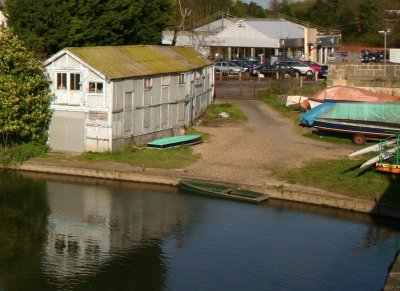 The firm under George was called Bond’s and when I took it over it became Bonds (Maidenhead) Ltd. In 1936 my wife took me to see some of her old friends in the Goring area, among them was the miller of Streatley. He was very old and took little interest until he heard that we were thinking of buying Bonds, when he came to life and said that he knew Jonathon [Bond?] when he was a cattle drover and used to rest the animals for a night at the mill. When he [Jonathon?] passed over the bridge, what made him think of the ferry rights? Were the toll charges too excessive? We do know that when Brunel’s railway stopped at Taplow while the bridge was being built, Londoners used to walk down to the river. Jonathon realised that taking them out in his ferry [from the slipway] was a money-maker and when he bought a few skiffs and let them do the work it was even better.
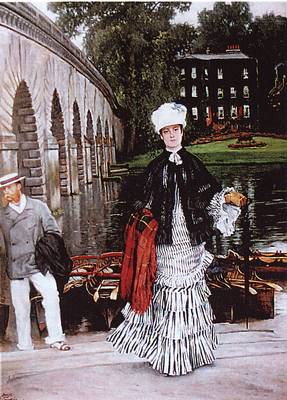 As you know, Jonathon’s older son was drowned in the Bray reach and George took over. In the First World War he and many other local watermen were in the Inland Water Corps, which ferried army stores along the canals. George heard that many new barges had been built in the Teddington area, but that it was unknown how to move them to Southampton or Bristol. George went to London and offered to do the job. Which he did by taking them to Bristol through the Kennet and Avon Canal. Later, in the inter-war years, the Great Western Railway tried to close the canal but the opposition was able to quote the use it had been. The GWR lost their case and the K&A Canal remains. One up to George!
An interesting snippet from the Financial Times of February 1891: Next to the site of the Bank of England or the Mansion House the most desirable freehold to own in this country is in the neighbourhood of Maidenhead Bridge. A correspondent informs us that a small strip of river frontage beside the bridge was let on Friday last by auction. It is only 140 feet long and 18 feet in depth, but a well-known boat builder [Bond?] thought it worth bidding a rental of £215 a year for the fortunate lessors being the Corporation of Maidenhead. The capital value of £215 a year, reckoned at 3½%, is worth over £6,000 and today [his time] would be worth £50,000.
The real reason of Bond’s high bid was that there were no other contestants except a stranger. After the sale a furious Bond asked the stranger how he would have been able to pay a rental of £215. 'Rental?' said the stranger, 'I thought it was for the freehold!'
[As a tailpiece, the story told by Mr Smith goes on to talk of the Festival of Britain in 1951, omitted from this narrative, when the landing stage collapsed...]
After the disastrous collapse of the landing stage we heard that Cecily Courtneidge was suing the Corporation (I gather Cecily was dumped in the river!) despite the marvellous publicity she got. The Mayor wrote to her to say that he was bringing the Town Clerk and me to see 'Gay's the Word', in which there were quips about the mishap. After the performance we went backstage to see her. She sat stony-faced with a lawyer on either side of her.
[A note for HTPS: In the programme for the Festival there is a mention of the Chauntry of St Andrew and Mary Magdalene. Is this the religious order that built and maintained the old wooden bridge?]
George Bond was with the crowd that took the old tollgates and threw them into the river!
Joy Marshall and Fred Russell
As you know, Jonathon’s older son was drowned in the Bray reach and George took over. In the First World War he and many other local watermen were in the Inland Water Corps, which ferried army stores along the canals. George heard that many new barges had been built in the Teddington area, but that it was unknown how to move them to Southampton or Bristol. George went to London and offered to do the job. Which he did by taking them to Bristol through the Kennet and Avon Canal. Later, in the inter-war years, the Great Western Railway tried to close the canal but the opposition was able to quote the use it had been. The GWR lost their case and the K&A Canal remains. One up to George!
An interesting snippet from the Financial Times of February 1891: Next to the site of the Bank of England or the Mansion House the most desirable freehold to own in this country is in the neighbourhood of Maidenhead Bridge. A correspondent informs us that a small strip of river frontage beside the bridge was let on Friday last by auction. It is only 140 feet long and 18 feet in depth, but a well-known boat builder [Bond?] thought it worth bidding a rental of £215 a year for the fortunate lessors being the Corporation of Maidenhead. The capital value of £215 a year, reckoned at 3½%, is worth over £6,000 and today [his time] would be worth £50,000.
The real reason of Bond’s high bid was that there were no other contestants except a stranger. After the sale a furious Bond asked the stranger how he would have been able to pay a rental of £215. 'Rental?' said the stranger, 'I thought it was for the freehold!'
[As a tailpiece, the story told by Mr Smith goes on to talk of the Festival of Britain in 1951, omitted from this narrative, when the landing stage collapsed...]
After the disastrous collapse of the landing stage we heard that Cecily Courtneidge was suing the Corporation (I gather Cecily was dumped in the river!) despite the marvellous publicity she got. The Mayor wrote to her to say that he was bringing the Town Clerk and me to see 'Gay's the Word', in which there were quips about the mishap. After the performance we went backstage to see her. She sat stony-faced with a lawyer on either side of her.
[A note for HTPS: In the programme for the Festival there is a mention of the Chauntry of St Andrew and Mary Magdalene. Is this the religious order that built and maintained the old wooden bridge?]
George Bond was with the crowd that took the old tollgates and threw them into the river!
Joy Marshall and Fred Russell