
Archived Page
This page is no longer maintained.
For up-to-date information please see the
new website
Cedar Chase Architecture
The architectural face that Cedar Chase presents to the pretty village of Taplow is bold and uncompromising, yet also quite introverted: a continuous, stepped terrace along Rectory Road of pale yellow brick housing, with dark-stained vertical timber cladding and distinctive horizontal white and green windows. The contrast to the established old vernacular of the village could hardly be more pronounced and the original reaction of many residents to the shocking new development can only be imagined! Yet this shady north-facing elevation is a screen, concealing a unique and brilliantly-conceived estate of family homes that has become an exemplar for modern, low-density housing. As an architect, the unplanned opportunity in 2004 to buy into the Span legacy has provided a first-hand demonstration of the value of excellent design. Span was formed by architect Eric Lyons and architect-turned-developer Geoffrey Townsend, who recognised in the growing design-conscious middle-classes of the late 1950s a market for innovative, well-designed housing. Their developments would literally "span" the gap between mass public housing projects and individual, bespoke architectural commissions. The buildings and landscapes were at the leading edge of architectural design, and Cedar Chase and the other 30-odd Span estates in the South-East of England are now widely recognised as exemplary far beyond the realm of Span aficionados. Originally receiving a Housing Design Award on its completion in 1966, the Cedar Chase design is simultaneously open yet private. Each house is an L-shape in plan, with ground-floor living and first-floor bedroom accommodation enclosing a small courtyard. Although the private garden of each house varies in size, this layout of house and immediate outdoor space is one of the keys to the design – the courtyard becoming an extra "room" for much of the year and providing shelter from autumn winds and winter frosts.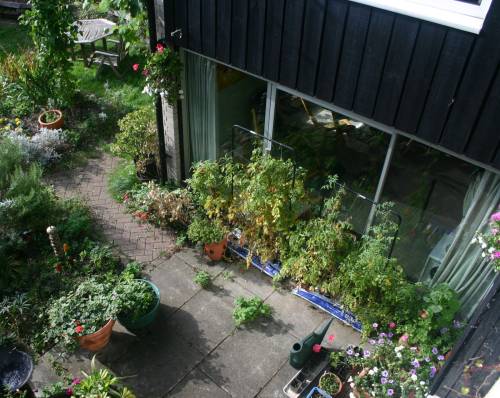 Wrapped around the courtyard, the modest living spaces are open-plan and full of light,
with large areas of south-facing glass (contributing to equally impressive winter draughts!), and reflecting the Scandinavian living model that the architect Eric Lyons is supposed to have admired.
Also vital to the longevity and success of the development is the overall planning of the estate, and in particular its sympathetic positioning within a large, existing garden.
The retained trees and shrubs were complemented by a new landscape and planting design that is now beautifully mature and well-maintained, and which continues to provide year-round variety and interest as well as a great place for families to play.
The uniquely continuing freshness and modernity of the 40-year-old design are perhaps best illustrated by looking at contemporary pop music - The Beatles’ double A-side, "Yellow Submarine"/"Eleanor Rigby", was at Number One in August 1966 - and cars - the Jaguar E-Type was the epitome of cutting-edge sports car design, while the Austin 1100 was typical of family motoring.
Or consider this: Cedar Chase was designed and built three years before the Apollo Moon landing, in the year that England won the World Cup – now doesn’t that seem like a different age?!!
Martin Knight
Wrapped around the courtyard, the modest living spaces are open-plan and full of light,
with large areas of south-facing glass (contributing to equally impressive winter draughts!), and reflecting the Scandinavian living model that the architect Eric Lyons is supposed to have admired.
Also vital to the longevity and success of the development is the overall planning of the estate, and in particular its sympathetic positioning within a large, existing garden.
The retained trees and shrubs were complemented by a new landscape and planting design that is now beautifully mature and well-maintained, and which continues to provide year-round variety and interest as well as a great place for families to play.
The uniquely continuing freshness and modernity of the 40-year-old design are perhaps best illustrated by looking at contemporary pop music - The Beatles’ double A-side, "Yellow Submarine"/"Eleanor Rigby", was at Number One in August 1966 - and cars - the Jaguar E-Type was the epitome of cutting-edge sports car design, while the Austin 1100 was typical of family motoring.
Or consider this: Cedar Chase was designed and built three years before the Apollo Moon landing, in the year that England won the World Cup – now doesn’t that seem like a different age?!!
Martin Knight