
Archived Page
This page is no longer maintained.
For up-to-date information please see the
new website
Church Recorders
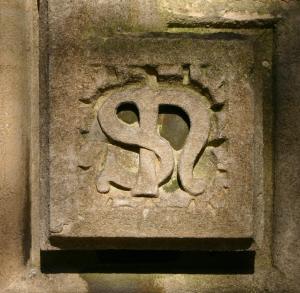 If you had been into St Nicolas Church on the last Friday of each month at the beginning of 2003, you would have found it alive with the members of Beaconsfield and Gerrards Cross Church Recorders, who are not players of shrill woodwind, or even weird young men with earphones and recondite technology, but an enthusiastic group of folk armed with notebooks, binoculars and tape measures who were making an exact record of the interior of the church, its roof, walls, floor and furnishings.
The completed record was presented to the church on Sunday, December 4, 2005. Highlights are the Rosencrantz stained glass windows, the floor brasses and the drawing of the old church. The record may be viewed by arrangement with the Rector, the Reverend Alan Dibden.
Church recorders are devoted amateurs who work in churches of all denominations in England, Scotland and Wales, building a national record of what Simon Jenkins has described as ‘a gallery of vernacular art...where the breeze of history makes its imprint’ (England’s Thousand Best Churches, published by Penguin Books).
Taplow residents have been involved in church recording since its inception in 1971 following the great Victoria and Albert Exhibition of Church Art. The exhibition revealed that many parishes were unaware of the treasures in their churches; perishable items were at risk and robberies were increasing at a frightening rate. Curators at the Victoria and Albert Museum discussed these problems with leading members of the National Association of Decorative and Fine Arts Societies (NADFAS) and with the support of the Bishop of Buckingham, members of NADFAS in South Buckinghamshire set about establishing a Church Recording Scheme. Mrs Jane Wright, who lived at Elibank and who is fondly remembered by her many Taplow friends, was one of those founder recorders and took part in the trial records of churches at Chalfont, Hambledon and Nether Winchendon.
Early supporters of the infant movement were Sir Roy Strong and Sir John Pope-Hennessey, and Kodak were generous in their help with photographic costs. By the end of 1973, seven groups of church recorders, including our own Thames Group, were in action, led by a national executive in London. Ahead lay the task of recording as many as possible of the 16-17,000 churches of the United Kingdom. Those original seven groups have multiplied to more than 200 and new groups form every year.
The early records were simple A4 sheets stapled between uniform green paper covers; today’s are handsome bound volumes with almost every recorded item illustrated by coloured photographs or line drawings. The building and its contents are recorded in eight categories: memorials, metalwork, stonework, woodwork, textiles, paintings, library, windows and miscellaneous. Members of a group usually build up considerable expertise in their chosen category. The church is tackled systematically, starting from the north-east corner of the chancel and working round the compass, not forgetting the bell-chamber! Notes are made and the fair copy written up to a common format, starting with a general description, which may well be long and very detailed, for example in the case of a finely carved pulpit or a large stained glass window. The materials, measurements, age and provenance of each item are listed and references given wherever possible. Mysteries arise and, occasionally, exciting discoveries are made, especially when the silver is taken out of the bank or when the detritus in the tower is dusted and sifted.
If you had been into St Nicolas Church on the last Friday of each month at the beginning of 2003, you would have found it alive with the members of Beaconsfield and Gerrards Cross Church Recorders, who are not players of shrill woodwind, or even weird young men with earphones and recondite technology, but an enthusiastic group of folk armed with notebooks, binoculars and tape measures who were making an exact record of the interior of the church, its roof, walls, floor and furnishings.
The completed record was presented to the church on Sunday, December 4, 2005. Highlights are the Rosencrantz stained glass windows, the floor brasses and the drawing of the old church. The record may be viewed by arrangement with the Rector, the Reverend Alan Dibden.
Church recorders are devoted amateurs who work in churches of all denominations in England, Scotland and Wales, building a national record of what Simon Jenkins has described as ‘a gallery of vernacular art...where the breeze of history makes its imprint’ (England’s Thousand Best Churches, published by Penguin Books).
Taplow residents have been involved in church recording since its inception in 1971 following the great Victoria and Albert Exhibition of Church Art. The exhibition revealed that many parishes were unaware of the treasures in their churches; perishable items were at risk and robberies were increasing at a frightening rate. Curators at the Victoria and Albert Museum discussed these problems with leading members of the National Association of Decorative and Fine Arts Societies (NADFAS) and with the support of the Bishop of Buckingham, members of NADFAS in South Buckinghamshire set about establishing a Church Recording Scheme. Mrs Jane Wright, who lived at Elibank and who is fondly remembered by her many Taplow friends, was one of those founder recorders and took part in the trial records of churches at Chalfont, Hambledon and Nether Winchendon.
Early supporters of the infant movement were Sir Roy Strong and Sir John Pope-Hennessey, and Kodak were generous in their help with photographic costs. By the end of 1973, seven groups of church recorders, including our own Thames Group, were in action, led by a national executive in London. Ahead lay the task of recording as many as possible of the 16-17,000 churches of the United Kingdom. Those original seven groups have multiplied to more than 200 and new groups form every year.
The early records were simple A4 sheets stapled between uniform green paper covers; today’s are handsome bound volumes with almost every recorded item illustrated by coloured photographs or line drawings. The building and its contents are recorded in eight categories: memorials, metalwork, stonework, woodwork, textiles, paintings, library, windows and miscellaneous. Members of a group usually build up considerable expertise in their chosen category. The church is tackled systematically, starting from the north-east corner of the chancel and working round the compass, not forgetting the bell-chamber! Notes are made and the fair copy written up to a common format, starting with a general description, which may well be long and very detailed, for example in the case of a finely carved pulpit or a large stained glass window. The materials, measurements, age and provenance of each item are listed and references given wherever possible. Mysteries arise and, occasionally, exciting discoveries are made, especially when the silver is taken out of the bank or when the detritus in the tower is dusted and sifted.
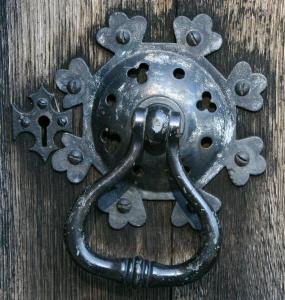 Most parish churches can be recorded in under two years but the record of Manchester Cathedral took nine years. When the checking and rechecking, collating, printing and, finally, the binding are complete, five handsome copies are ready. The principal copy is presented to the church, usually during a regular service; further copies go to the diocesan archives, the Council for the Care of Churches, the Victoria and Albert Museum Art Library and NADFAS archives. For obvious reasons, these volumes are kept secure and are open only to scholars and readers with a legitimate interest.
The well-equipped recorder has warm socks, thick trousers and fingerless gloves for winter work and there is always a flask of coffee in their large recording bag alongside a notepad, pencils, tape-measure and a copy of the recorders’ bible, Inside Churches: A Guide to Church Furnishings. The vocabulary of the recorder is rich indeed; terms such as 'parclose', 'credence', 'entablature' and 'iron loop-drop twist latch' slip from his tongue and are very useful when solving crosswords!
Over 1,000 churches have been recorded in the 33 years since 1973. Mrs Sheila Peroni leads the recorders of Thames ADFAS in the South Mercia area, which covers Berkshire, Buckinghamshire and Oxfordshire, and the recorders from Taplow work on metalwork and woodwork. They have completed records of churches at Chinnor, Hughenden, Lane End, Cadmore End and Nether Winchendon and in April will start at Radnage.
Helen Grellier
Most parish churches can be recorded in under two years but the record of Manchester Cathedral took nine years. When the checking and rechecking, collating, printing and, finally, the binding are complete, five handsome copies are ready. The principal copy is presented to the church, usually during a regular service; further copies go to the diocesan archives, the Council for the Care of Churches, the Victoria and Albert Museum Art Library and NADFAS archives. For obvious reasons, these volumes are kept secure and are open only to scholars and readers with a legitimate interest.
The well-equipped recorder has warm socks, thick trousers and fingerless gloves for winter work and there is always a flask of coffee in their large recording bag alongside a notepad, pencils, tape-measure and a copy of the recorders’ bible, Inside Churches: A Guide to Church Furnishings. The vocabulary of the recorder is rich indeed; terms such as 'parclose', 'credence', 'entablature' and 'iron loop-drop twist latch' slip from his tongue and are very useful when solving crosswords!
Over 1,000 churches have been recorded in the 33 years since 1973. Mrs Sheila Peroni leads the recorders of Thames ADFAS in the South Mercia area, which covers Berkshire, Buckinghamshire and Oxfordshire, and the recorders from Taplow work on metalwork and woodwork. They have completed records of churches at Chinnor, Hughenden, Lane End, Cadmore End and Nether Winchendon and in April will start at Radnage.
Helen Grellier