
Archived Page
This page is no longer maintained.
For up-to-date information please see the
new website
Taplow Canutes and Ostriches
John Hanford
At the meeting in the Village Centre last year to discuss the Parish Plan, Professor Trevallion, who introduced it, said that the majority of the inhabitants wanted to retain the status quo of the village and its surroundings. However, it became apparent from the discussion that followed that many in the room wanted the status quo ante, preferably that which existed in the early 60s, together with the butcher’s shop and the village store which existed then. This despite the fact that neither shop was, nor would be, economic.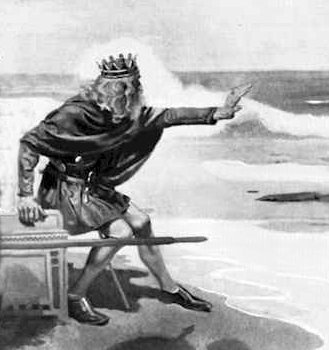 The Canutes in fact, wished to turn back the tide of change which the village had experienced since that date. The importance of horses to the village was stressed, and the dangers to pedestrians of the increased volume and speed of traffic on the road. In the 60s, children either walked to school, or caught the bus which arrived every morning from Lent Rise and terminated at the school. In fact there was a general feeling that more buses would be a good thing through the village, and if present and frequent, would persuade people not to use their cars to go to the station or to Maidenhead.
Unfortunately, like Canute, the changes are irreversible, and trying to reverse them will not succeed. Who would want (or could) carry their shopping back from the supermarkets on the bus? How would the shopping (normally for two people for a week - at least four or five carrier bags full) get from the supermarket to the bus, and from the bus stop to the homes of the shoppers? Unless people gave up their cars completely (an unlikely event) it would be cheaper to go by car as well as more convenient. Of course with free bus passes for pensioners it would be cheaper for them (but the Government seems strangely silent on who would pay for these - presumably it would be funded through the rates).
The Canutes in fact, wished to turn back the tide of change which the village had experienced since that date. The importance of horses to the village was stressed, and the dangers to pedestrians of the increased volume and speed of traffic on the road. In the 60s, children either walked to school, or caught the bus which arrived every morning from Lent Rise and terminated at the school. In fact there was a general feeling that more buses would be a good thing through the village, and if present and frequent, would persuade people not to use their cars to go to the station or to Maidenhead.
Unfortunately, like Canute, the changes are irreversible, and trying to reverse them will not succeed. Who would want (or could) carry their shopping back from the supermarkets on the bus? How would the shopping (normally for two people for a week - at least four or five carrier bags full) get from the supermarket to the bus, and from the bus stop to the homes of the shoppers? Unless people gave up their cars completely (an unlikely event) it would be cheaper to go by car as well as more convenient. Of course with free bus passes for pensioners it would be cheaper for them (but the Government seems strangely silent on who would pay for these - presumably it would be funded through the rates).
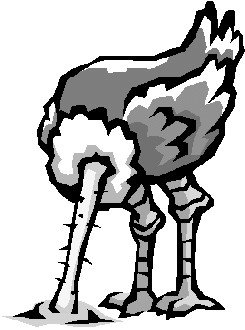 The Canutes were complemented by the Ostriches, who think that everything can remain as it is now. There will be no increase in car or lorry traffic or speeds. Crossrail will have no effect on the village or its parking requirements. When one resident raised the question of whether the village should consider the advantages of being connected to a cable network, there was general bemusement. In fact cable (or satellite) connections with large bandwidths and video conferencing ability, would enable many, especially mothers with children, to work from home, thus not only reducing the commuting travel pressures, but increasing the wealth and happiness of their families. Cheap home cinema equipment, digital radio and television, and video from the Internet will mean less need to travel for entertainment. Better quality prepared meals means less need to go to the takeaways.
Not everyone (and particularly the older residents) will like this Brave New World, or will wish to take advantage of it. But to the younger generation without the memories of “how it was”, it will seem quite normal, and whatever anyone wishes, it will happen. Who would have thought, even fifteen years ago, that by 2005 pretty well every house in the village would have a computer connected to E-mail and the Internet, that everyone would have a mobile phone, and, if they were also young, this would be combined with a camera, Internet connection and an i-Pod playing music?
Instead of trying to turn back the clock or keep things as they are now, should we not be looking at what changes are going to occur, and how we should best accommodate them? The negative nature of much of the discussion on the Parish Plan was depressing. Ignoring change or trends is not going to help, and in fact will hinder the making of the decision and policies we need to improve our environment and enjoyment of the village in the future.
The Canutes were complemented by the Ostriches, who think that everything can remain as it is now. There will be no increase in car or lorry traffic or speeds. Crossrail will have no effect on the village or its parking requirements. When one resident raised the question of whether the village should consider the advantages of being connected to a cable network, there was general bemusement. In fact cable (or satellite) connections with large bandwidths and video conferencing ability, would enable many, especially mothers with children, to work from home, thus not only reducing the commuting travel pressures, but increasing the wealth and happiness of their families. Cheap home cinema equipment, digital radio and television, and video from the Internet will mean less need to travel for entertainment. Better quality prepared meals means less need to go to the takeaways.
Not everyone (and particularly the older residents) will like this Brave New World, or will wish to take advantage of it. But to the younger generation without the memories of “how it was”, it will seem quite normal, and whatever anyone wishes, it will happen. Who would have thought, even fifteen years ago, that by 2005 pretty well every house in the village would have a computer connected to E-mail and the Internet, that everyone would have a mobile phone, and, if they were also young, this would be combined with a camera, Internet connection and an i-Pod playing music?
Instead of trying to turn back the clock or keep things as they are now, should we not be looking at what changes are going to occur, and how we should best accommodate them? The negative nature of much of the discussion on the Parish Plan was depressing. Ignoring change or trends is not going to help, and in fact will hinder the making of the decision and policies we need to improve our environment and enjoyment of the village in the future.