
Archived Page
This page is no longer maintained.
For up-to-date information please see the
new website
The End of the Line for Landfill
Every man women and child in this country creates their own lorry-load of waste every year - a mind-numbing 177 million tonnes in total. It wasn't so long ago that we all happily threw everything from beer bottles to newspapers, chicken bones to fish and chip wrappers into dustbins. There were collected by the 'bin men' and then disappeared out of sight into noxious landfill sites. Carry on at that rate and such a waste of land could turn us into a land of waste! The EU has, of course, laid down directives on waste management, the UK government has done the same and each local council has its own polices and targets for waste reduction and recycling. South Bucks District Council is no exception. Councillor Nick Naylor, who represents Lent Rise and is also Council Cabinet Member for the Environment says with some satisfaction: "Under our new waste collection scheme, which began this spring, we've almost halved the residual waste from 268 tonnes a week to 145 tonnes a week. Now between 50% and 60% of what we collect is recycled, which would potentially put us in the top 30 out of 350 councils." This residual, or non-recyclable waste, which includes anything from polystyrene packaging to pet food pouches, goes to the huge landfill site at Wapseys Wood and the smell of methane gas will be familiar to anyone travelling on the A40 west of Beaconsfield. But even that is now being turned into energy. Emptying lorry loads into landfill was easy but the modern waste collection sorting and recycling programme is a sophisticated triumph of logistics. Biffa is South Bucks District Council's waste contractor and their depot at Dropmore Road, Burnham is the local waste hub. Darren Judd, the depot's Business Manager explains: "Every working morning, the drivers arrive before 7.00 a.m. to put their trucks through a 76-point maintenance and safety check. Then the three recycling crews are out collecting from the district. This is split into two segments, West including Taplow and East out towards Iver, around 28,000 households in all. "Drivers have to be skilled at negotiating narrow roads and reckon they spend 40% of their time in reverse. Each lorry has three cameras for safety purposes and the crew has a handheld device on which they note any incidents such as a customer being left a card explaining why their rubbish has been left uncollected. So every minute of the crew's day is recorded and sent back to base." With 60,000 different household collections a week, that is a lot of data! The crews are a cheerful bunch and genuinely enjoy their jobs. "It's out in the open air and keeps you fit," says Rhys Watkins from Slough. He's the new boy on the block only having been with driver Alan Burnard's crew for two weeks. His loader partner is Ian Wiles who's a veteran of ten years so can well remember the black bag days. "It's better with the bins," he says, "Quite often the bags got ripped open by foxes and stuff was all over the road." Dave Wood, South Bucks DC's Contract Manager admits: "We have had a few little problems with customers settling into the new system but generally people are really in favour of recycling and do their best. The main issues of confusion have been where to put paper and card." In fact, paper and grey card go into the black box, brown card into the blue-topped bin. Food and garden waste used to go into the same green bin and was collected free. Now there is a brown caddy bin for food left-overs and those who still want their garden waste collected have to pay £45 a year for the service. There have been grumbles about the charge and also that biodegradable bags aren't going to be provided for food waste free for ever. "The collections we are legally obliged to make don't include garden waste," explains Dave, "And you can buy biodegradable bags for a £1 a pack in some places." "Why can't we have a incentive scheme like the Royal Borough where they get gift vouchers for recycling?" asked Hag Hill Rise resident Jackie Hearne. "Ah!" responded Dave "That is something we are very actively considering". So watch this space. Food waste is collected from residents' brown caddies by the drivers of four special white collection trucks, which each hold nearly seven tonnes of food scraps and inedible food like eggshells and bones. Over 500 tonnes of this is collected every year and it all goes to an anaerobic digestion plant near Oxford. This produces enough electricity to power 17,000 homes. Garden waste goes to another site to be turned into compost. And what of the other materials we are so carefully sorting? Trucks come to Dropmore from Shotton in Cheshire every week to collect the paper for recycling into newsprint. The rest goes Biffa's recycling centre in Edmonton where twice a week an articulated lorry collects plastics, cans, glass, and brown cardboard for sorting. The Edmonton Recycling plant is in an unpretty part of North East London and is the size of an aircraft hangar. Two thirds of the building is taken up by a mountain of rubbish brought in by the lorry-load from many councils and other sources. It is then transferred to a process where a network of conveyor belts and sorting rooms eventually turns this mess of detritus into neat bundles of recycled material. The sorting is part done by machines and partly by people. In the mechanised sections, paper is flung off by a giant threshing machine because it is lighter than plastic or aluminium. Aluminium cans are in turn sucked off the conveyor belt by extremely powerful magnets. But you can't beat the human eye to spot a renegade item and is the human 'pickers' who have the toughest job, The plant employs 400 people working ten-hour shifts two days and two nights and then four days off. Virtually all the sorters are from Eastern Europe. "We hardly ever get any British people applying to work here," says Senior Production Supervisor, Leonard Baker, himself a South African. The pickers do work extremely hard, three and a half hours before a break. They are constantly pulling off card, bits of metal, wood, batteries, nappies and even the occasional Samurai sword or flinging plastic bags up into giant suction chimneys. They can't take their eyes off the belt or some rogue piece of card or metal will zip by. The job of course requires no language skills just an eagle eye and a quick hand - not that there's any time for sociable banter. Most come from Poland but others include Czechs, Slovenians and Hungarians, typical of whom is 32-year old Katalin Czuspor who has been at the plant for three years and is now a team leader. "I came to Britain and at first I did hotel work," she says with a smile, "But that was really hard." Goodness, harder than staring at a moving line of waste with a target of 45 picks a minute! Gradually, all the material is sorted into different types of recyclables. Plastics are separated into clear, coloured or HDPE (used milk bottles and the like), likewise card and paper have to be split. Eventually it is all ready to be pressed into one tonne bales or bins of glass - a tonne is 1,000 kilograms. These will then go on specialist recycling and manufacturing plants to be turned back into newsprint, or bottles, or packaging, or plant pots. "Each shift turns round an average of 200 tonnes of paper, 30 tonnes of card, 10 tonnes of aluminium, 10 tonnes of steel, about 45 tonnes of plastics and 50 to 100 tonnes of glass," says Leonard Baker with pride. That's around 40,000 tonnes a year - quite a load of rubbish! Just two percent of the material sent in by South Bucks is unusable. It's more like 10% from all the other sources. So the very last conveyor belt in the centre is the sad one which contains the bits and pieces which cannot be recycled and are heading for landfill. It rolls by like the prize line in the Generation Game: "A broken garden chair......a baby's nappy.......a table leg........ a cuddly toy!" Caroline Gillies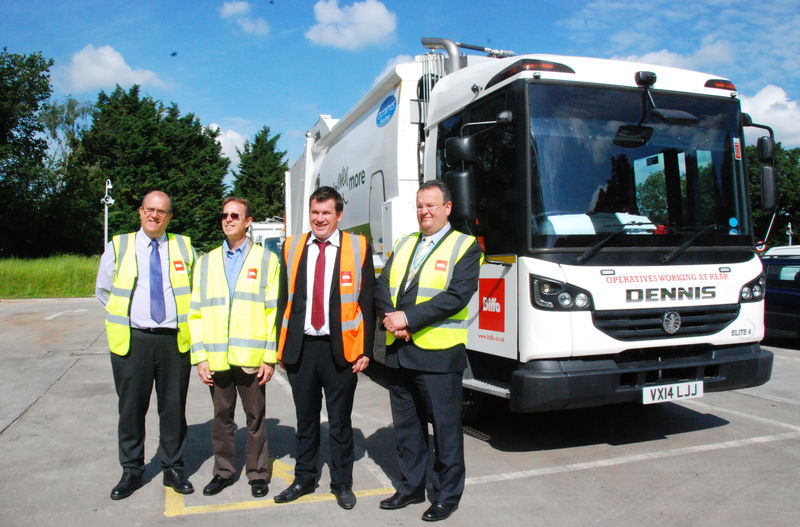 From left to right Brian Ashby, Biffa's regional Manager, Nick Naylor, SBDC Councillor for Lent Rise and Cabinet Member for Environment ,Darren Judd, the depot's Business Manager.
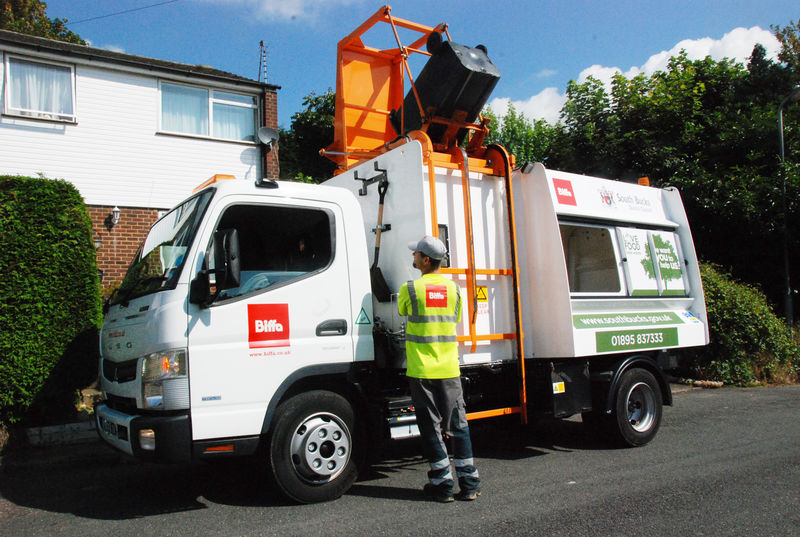 Driver Jeff Howe empties the small brown caddies of food waste into a bigger black bin, which is then tipped into the collection truck.
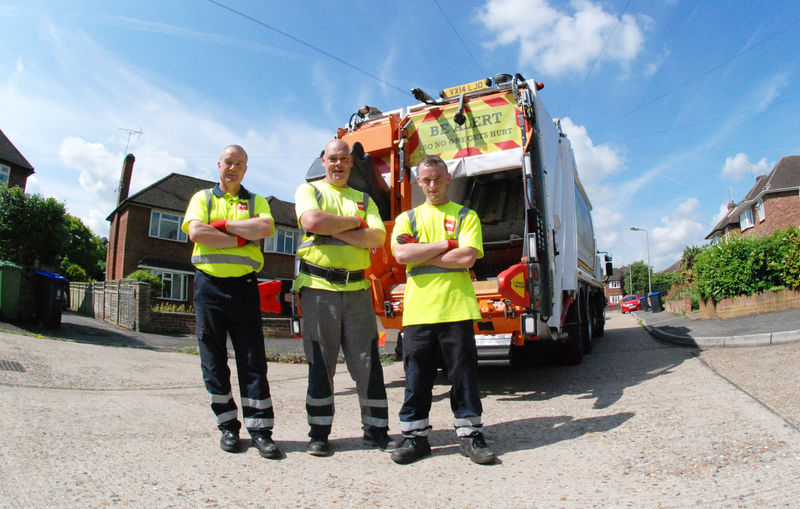 Three men and a lorry. From the left Driver Alan Burnard, Ian Wiles and Rhys Watkins.
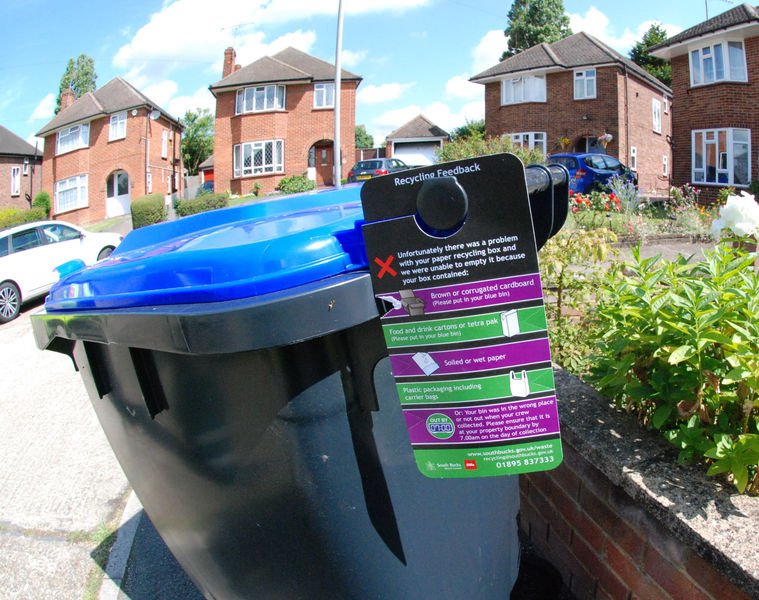 A confused resident gets a colourful reminder of what should go in which bin!
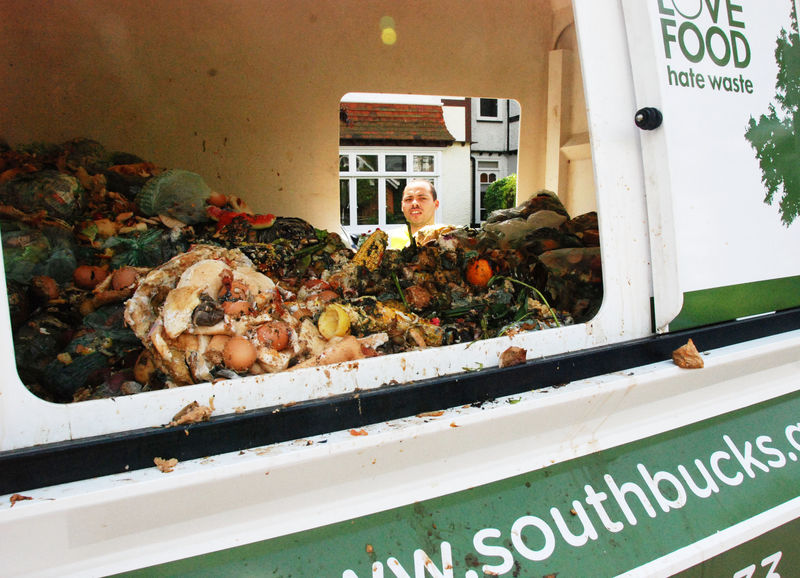 Driver Ryan Francis collecting food waste in the special truck which holds up to seven tons. This all goes to a bio-digester near Oxford and is used to generate electricity.
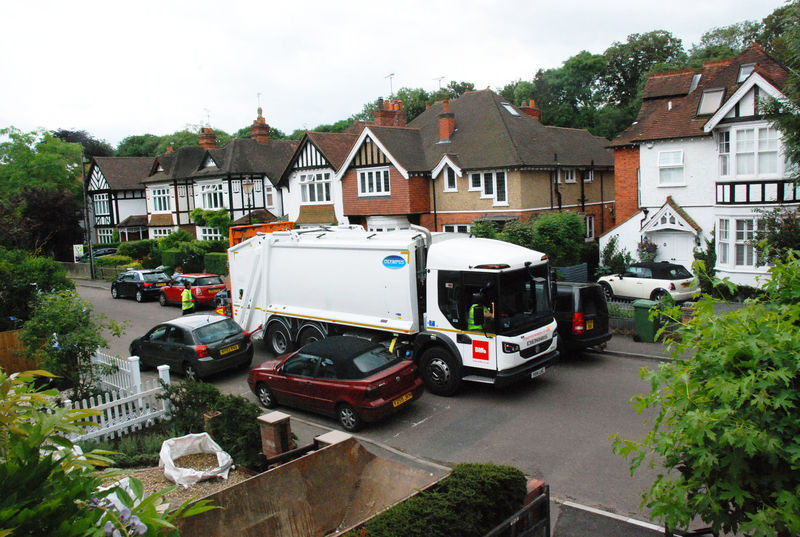 The waste collection lorry in Ellington Road, Taplow.
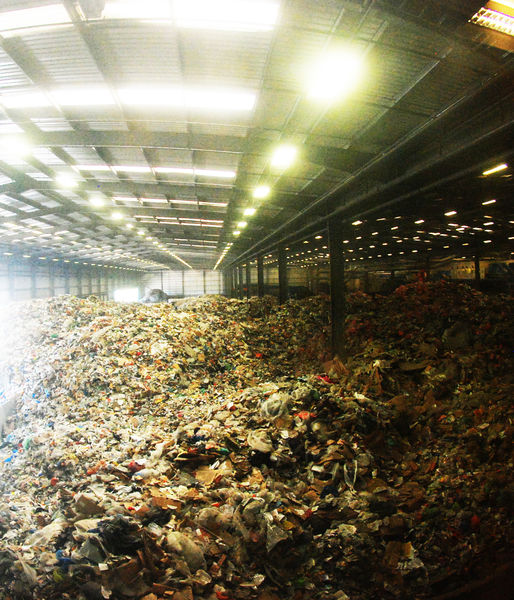 A sea of waste plastic, glass, paper and card at Biffa's Edmonton Recycling Plant (NB. Taken through thick and dirty glass)
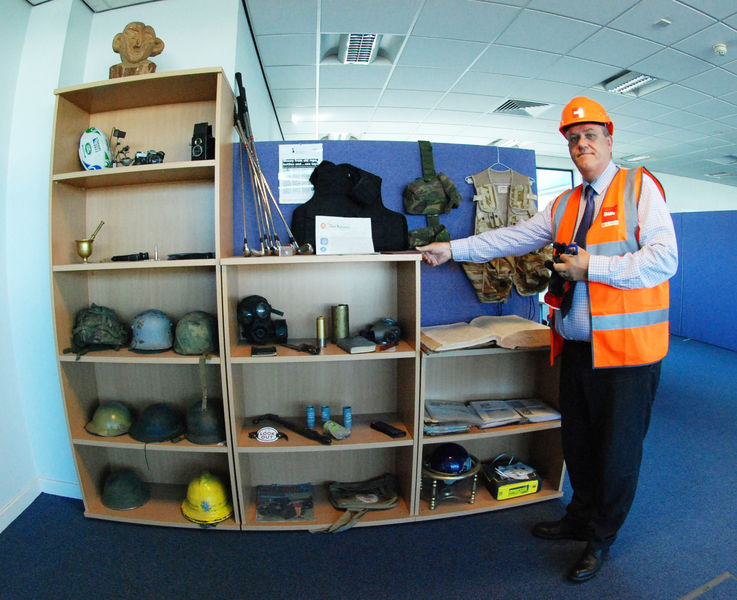 Biffa's Regional Manager Brian Ashby with some of the items found in waste bins including fake firearms, swords, helmets and flack jackets
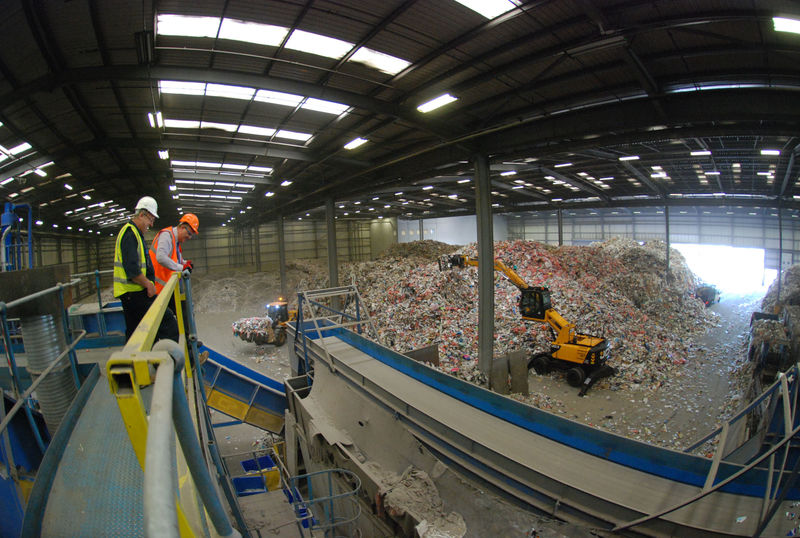 Leonard Baker (left) Senior Production Supervisor at Biffa's Edmonton Recycling Pant with Regional Manager Brian Ashby overlooking the waste mix
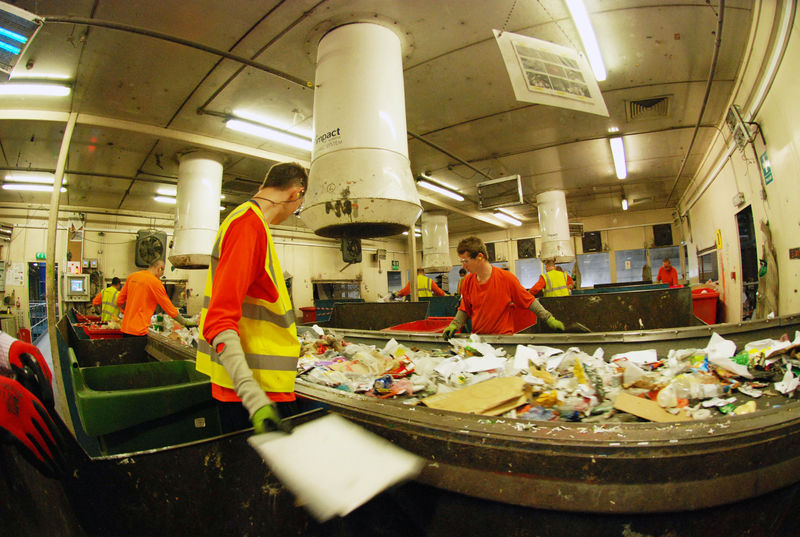 One of the 11 stages of hand sorting at Edmonton there are also 10 automatic sorting machines.
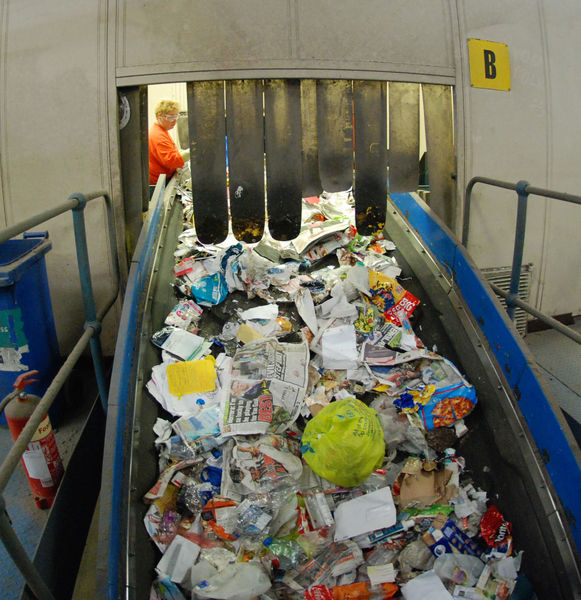 A conveyor belt of rubbish - from plastic bags to sweet wrappers - on its way for initial sorting.
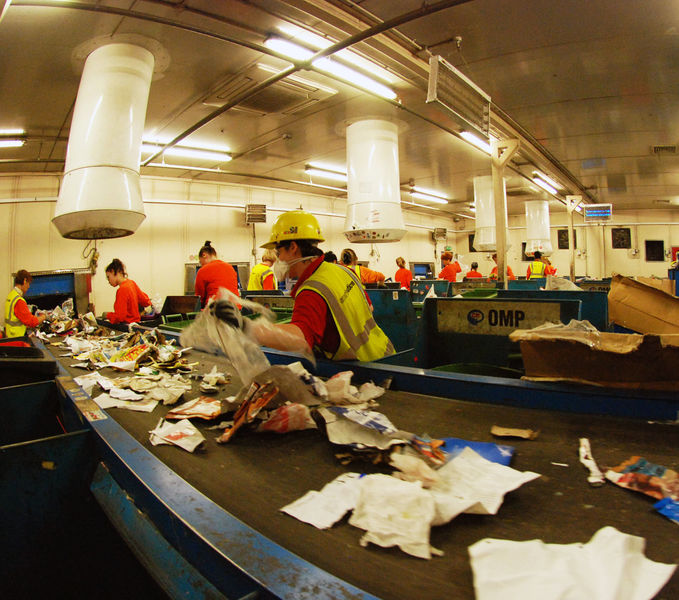 Women working on one of the sorting rooms. They have to concentrate on the fast-moving lines and pick off anything that cannot be recycled.
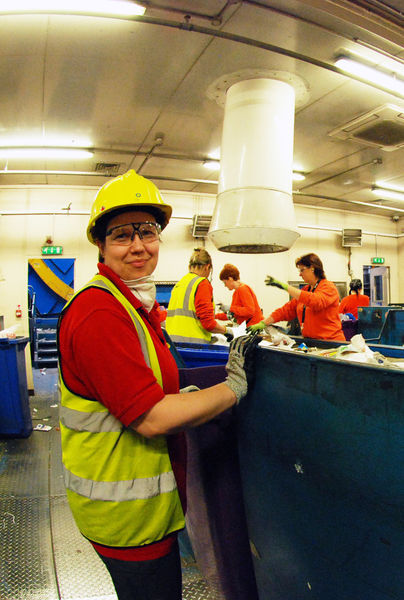 Team Leader Katalin Czuspor, 32, from Hungary has been at Edmonton for three years. Most of the 400 staff are also from Eastern Europe
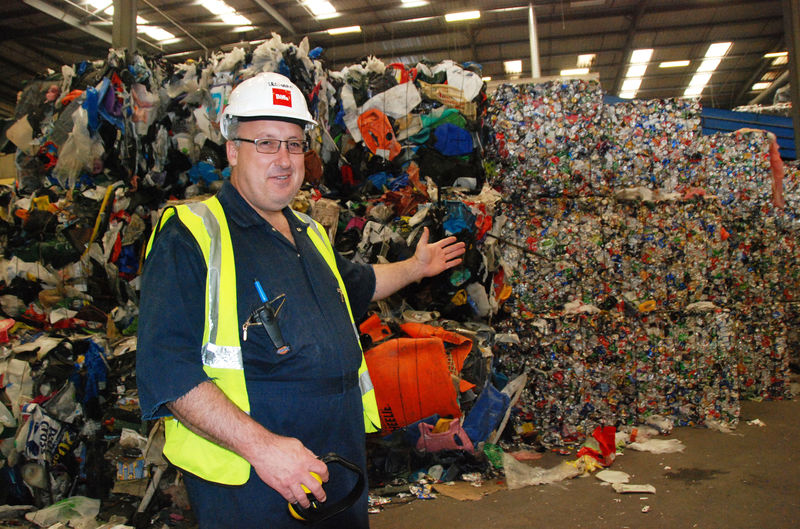 Leonard Baker is pleased with some examples of the end product – one tonne bales of mixed plastic and aluminium cans.