Archived Page
This page is no longer maintained.
For up-to-date information please see the
new website
Holding Area for Any Answers
The truth is out there. Some people look for it on the Hitcham & Taplow Society website at http://www.taplowsociety.org.uk. Nowadays such enquiries tend to be passed to me. I am by no means the font of all knowledge but the research I’m doing for my book on the history of Taplow means I have been able occasionally to come up with a few answers summarised below. Perhaps you have better information; if so please let me know on 01628 661636 or cazanig@aol.com.The Orkney Exile
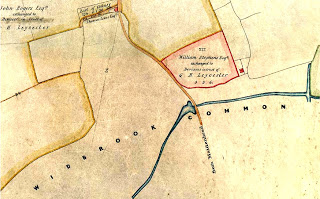
James Hatch now lives on Vancouver Island in Canada’s far west. He keeps in touch with his childhood roots in Cookham’s Widbrook Cottage by running a blog called Historical Cookham at http://widbrook2.blogspot.com. His query concerned an 1852 map which indicates that the Earl of Orkney lived at Cliveden View in the middle of Widbrook Common.... This would have been Thomas FitzMaurice, 5th Earl of Orkney, who inherited not only his grandmother’s title in 1831 but also her parlous financial plight. Consequently in 1852 he became the man who sold Taplow. The auction of 40 lots (plus three nearby) raised £102,415. The Orkneys had for many years also owned bits of Berkshire, one of which it seems was this Widbrook house from which perhaps he gazed forlornly at his erstwhile estates in Taplow. [Widbrook Common map 1852, posted by James Hatch on his blogsite]Searching at Silchester Manor
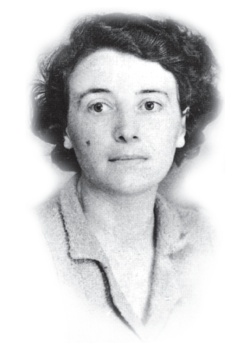
Sylvia Topp is an American psychologist writing a biography of Eileen O’Shaughnessy who married the author George Orwell in 1935. She wanted to know about Silchester House, a girls’ boarding school in 1927 when Eileen was an assistant mistress there.... Beatrice Roberts was ‘mistress’ of Silchester Manor from before 1911 until at least 1940. I could find no record of Eileen’s brief stay in Taplow but did come across Miss Y Blonay, an assistant mistress there in 1932. She must surely be related to the Swiss nobleman Baron Godefroy de Blonay who served on the International Olympic Committee alongside Willy Grenfell, 1st Baron Desborough. [snapshot of Eileen from internet]The Making of Maidenhead
Early last summer, Barbara Askew was putting together Maidenhead Riverside Walking Tours. Her query was about the origins of ‘Maidenhead’s scandalous reputation’. The credit (or the blame) is usually laid at the door of William Skindle but his is not the whole story. He was long gone before Skindle’s halcyon days in the Naughty Nineties and Noughties. Skindle was landlord of The Orkney Arms by 1833, which was rather good timing. The railway arrived in 1838 bringing thousands to enjoy the riverside and mess about in Jonathan Bond's boats. The adjoining Hotel Tap was opened to sate the thirst of day-trippers. Business boomed. When he died 1867 it took both his sons William and Henry to step into his shoes. However it was their successor Henry Hoare who in 1876 renamed the inn Skindle’s Hotel and really made it famous. James Hodgson took over in the Edwardian era and, after The Brigade of Guards Boat Club moved its frivolities across the river in 1904, he expanded into its riverside premises. By the time the original hotel was demolished in the 1950s its former annexe had long usurped its parent to become Skindle’s, an iconic hotel in its own right, complete with a swinging night club. Nowadays all these buildings are in Taplow as was The Orkney Arms (the original Skindle’s), so how come Skindle’s came to mean Maidenhead? The simple answer is that the original Guards Club was in a Bucks bank sliver of Berkshire, an expedient remnant of the construction of the bridge in the 1770s not repaired until the 1980s.Rings a Bell
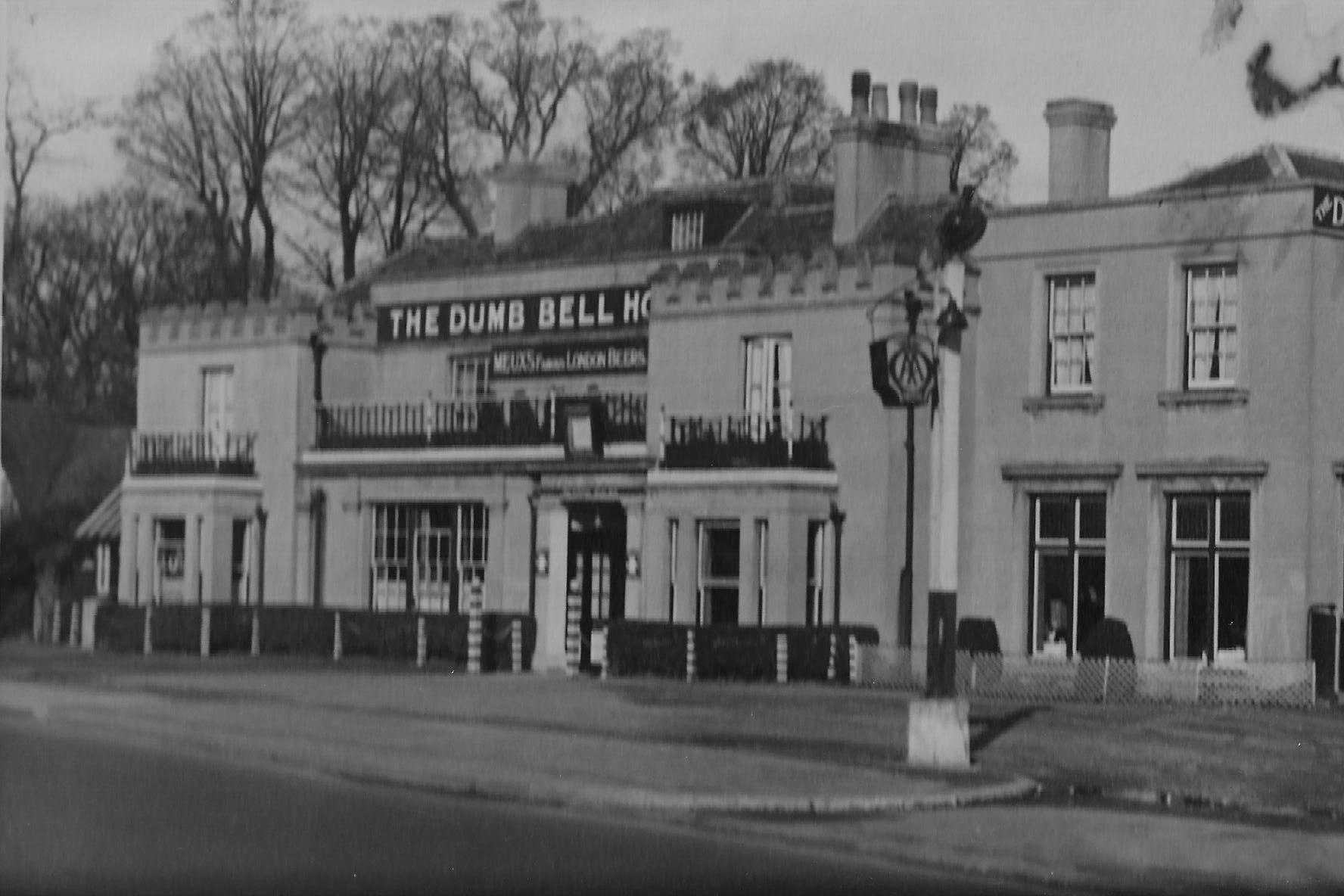
The Maidenhead Bridge riverside was a magnet for people with money to spend and others who were after a slice of the action. By 1851 James Allen had come from Tetsworth in Oxfordshire to drive a fly (a two-wheeled horse-drawn carriage) at The Bell & Crown Inn. His grandson Professor John Owens wondered what happen to the inn.... The flourishing Marlow brewer Thomas Wethered opened The Dumb Bell Hotel in the 1780s. His sons Owen and Thomas Wethered leased the hotel in 1842 to Richard Cleare, a Burnham farmer and butcher who renamed it The Bell & Crown Railway Hotel. It became Cleare’s Hotel from the early-1860s until the late-1880s when it reverted to its original name in the care of John Christmas Payne. By 1935 the hotel boasted its own garage, a natural step from its days as a coaching inn and the seed of its eventual fate. The garage was the primary business by the 1980s and soon a car sales showroom nudged The Dumb Bell eastwards to become a Harvester restaurant. [archive photos of Dumb Bell, various dates]Wither White Heather?
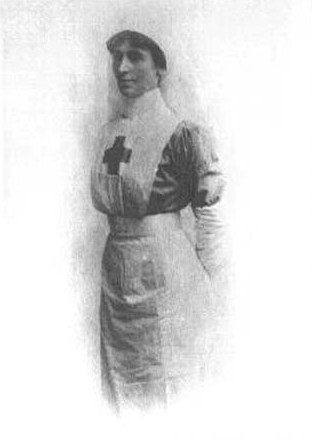
Nick Hunt lives in Hertfordshire not far from Panshanger, formerly a large country house inherited in 1905 by Ethel Grenfell, Lady Desborough. He is trying to discover why a woman with the magnificent name of Olive Millicent de Satgé de Thoren should be commemorated on the nearby Hertingfordbury war memorial alongside Ethel and Willy Grenfell’s sons Julian and Gerald (Billy) who were killed in action during the Great War.... The Grenfell boys had the same connection to Panshanger as they do to Taplow Court but this wasn’t Nick’s only lead to Taplow. Olive’s records give her address at the time of her death on 16th October 1917 as White Heather, Taplow – the original name for Fred Russell’s house White Heath in Ellington Road. I’ve checked the war diary of the Duchess of Connaught Hospital at Cliveden but with no joy – or rather, no Olive. Does her name ring any bells out there? [WW1 snapshot of Olive found by Fred Russell on online forum]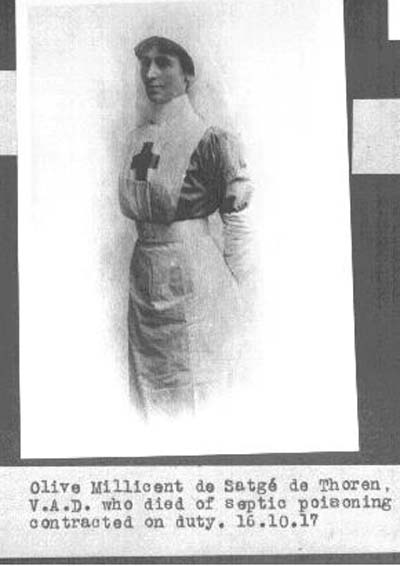
Other refs found 12th October 2014:
- http://1914-1918.invisionzone.com/forums/index.php?showtopic=70172
- http://www.cousinconnect.com/d/a/69262
The Stockwells Studio
Stuart Montgomery is preparing an e-guidebook for walks in and around Slough. He wanted to know about Stockwells, a large and badly maintained mansion with a basement film studio where Gerry Anderson of Thunderbirds fame worked early in his career.... The present day cul-de-sac occupies the site of The Elms, a grand house built in the 1820s on a ‘close’ (field) called Stockwells. By the mid-1950s ‘Smithy’ Smith-Morris of Polytechnic Studios had bought The Elms, renamed it Stockwells and converted its cellar into a film studio where Anderson made television programmes so awful that in early 1957 Polytechnic went into liquidation. Anderson, Arthur Provis and friends founded Pentagon Films and made some TV adverts at Stockwells including Noddy promoting Kellogg’s Cornflakes – Anderson’s first venture into puppetry, something he hated with a passion – only for Pentagon to go bust within a year. This was the end for the Stockwells studio. The friends launched AP Films at Islet Park in Maidenhead only to struggle financially until Roberta Leigh engaged Anderson to direct The Adventures of Twizzle. One string led to another and the rest is history, the zenith being Thunderbirds, made at Slough in the mid-1960s.Having a Butcher’s
Chris Rance lives in Birmingham. He wanted to know more about his Taplow ancestors.... His great-great grandfather William Rance came from Wooburn Green in 1832 to take over as the village butcher and become a leading light in Victorian Taplow. By 1852 he could afford to dabble in property development by investing £115 in the acquisition of Little Coldgrove where he built Coldgrove Cottages, still there on Hill Farm Road. And in 1863 he acquired a Hitcham meadow, probably the (since extended) site of Hitcham Lodge, Hitcham Close and Hitcham Cottage, and a parcel of land and its jumble of buildings east of today’s High Street. Of the four houses one this site now, only one – Number Three – survives from William’s time. It was the Gurney family grocer’s and post office from the 1840s until the 1930s when it became a Budgen’s by virtue of the Budgens and the Rances being related by marriage. Mulberry House was built in the 1860s as William Rance‘s home and shop. His son William continued the business there until his death in 1916 when his widow Louisa called it The Hollies, a name it retained until around 2000. Clent House stands in what was the Rance’s orchard. Rozel was originally a pair of cottages built just over 100 years ago by the younger William; the northern one was Edward Britten’s dairy until the Second World War. Chris is the grandson of William the Younger’s son William (b1893). I was able to reintroduce him to his cousin Jim Rance of Crazies Hill, the son of William the Younger’s son Maurice who was born in The Porches in 1899.No Pearcing Insight
Andrew Pearce was on the track of his ancestors George and Sarah Pearce. He wondered if they were related to the Pearce-Serocolds who lived at Taplow Hill (on the site of Cedar Chase).... George and Sarah did indeed marry in 1791 in what was then St Nicholas Church. The only other Pearce in the Parish Register is Hannah, daughter of James, a servant. She married gardener William Jaycock in 1848 and lived for many years on Station Road (now Boundary Road) near to Taplow Grammar School. These few Pearces have no apparent connection with Charles Pearce-Serocold who arrived from Cambridge around 1860.On the Trail of the Taplow Twins
Christina Rawlings has been in New Zealand since 1966. She is trying to find her husband Trevor’s twin cousins who were born to his Uncle Ronald Prince in Taplow on 14th November 1948 with half-an-hour of Prince Charles.... I wondered if these ‘Taplow Twins’ made their debuts at Cliveden Hospital but my researches failed to find anything about them. As it turns out, that’s no surprise because the family name was wrong. Maidenhead Library discovered that Christopher and Lynne were born in Windsor to Joan & Thomas Calcott who lived at ‘Fairlawn’ in Marsh Lane. Does anyone recall them? Nigel Smales