
Archived Page
This page is no longer maintained.
For up-to-date information please see the
new website
Save Our Walls!
One of the defining features of Taplow is the high red-brick walls. Many of these have been in place for a hundred years or more and they could do with a bit of TLC. We were reminded of this with a thump on the evening of 7th July 2016, when a section of Elibank Court's front wall fell into Rectory Road. Nobody was hurt, but the road was blocked for a few days while the bricks were recovered and a row of Leylandii was felled. When the rest of the wall was cleared of ivy it became obvious that there were more problems: the newer section of wall has a large crack and the wall that continues along the front of Elibank House is also leaning. Looking around the village it is easy to find more walls with problems - some lean, some bulge, and some crack. It is interesting to consider why some walls behave differently, and if you look carefully you will notice that newer walls crack whereas older ones adapt more gracefully to the pressure of soil and trees. This is because the old walls are made with lime mortar where the newer ones have Portland cement. Modern cement can be made to be very strong, but this is not necessarily a good thing: in the presence of an irresistible force (and the growth of a tree is hard to resist over a few years) something has to give. If the mortar is stronger than the bricks, a crack will propagate right through bricks and mortar almost in a straight line and the wall loses most of its strength straight away. Lime mortar on the other hand is much weaker so it allows bricks to move relative to each other. What is more, it is self-healing: the action of rainwater gradually moves lime to seal small cracks. Another problem occurs where old walls have been re-pointed using Portland cement. Because the new mortar is extremely hard, the action of frost causes it to work loose. It can also cause major damage to soft bricks which are squeezed until the front face cracks off. You can see examples of this in several places around the village. Lime mortar is still available. You won't find it in DIY superstores (and it is not the same as the Hydrated Lime that is sold as a mortar additive for use with Ordinary Portland Cement). There are several suppliers around the country, and they will even make up a mix to match your existing wall if the standard colours are not what you need. It is available in different strengths, though the weakest is normally best for our sort of wall. This is called NHL 2.5 - Natural Hydraulic Lime with a compressive strength of 2.5N/mm squared. I have used this for repairing old walls around Cedar Chase, and also for a rebuild where I know that a nearby tree is still pressing on the foundations. If you are responsible for one of Taplow's old walls, please give it some TLC: repair and re-point using a suitable lime mortar and it will give you another hundred years' service.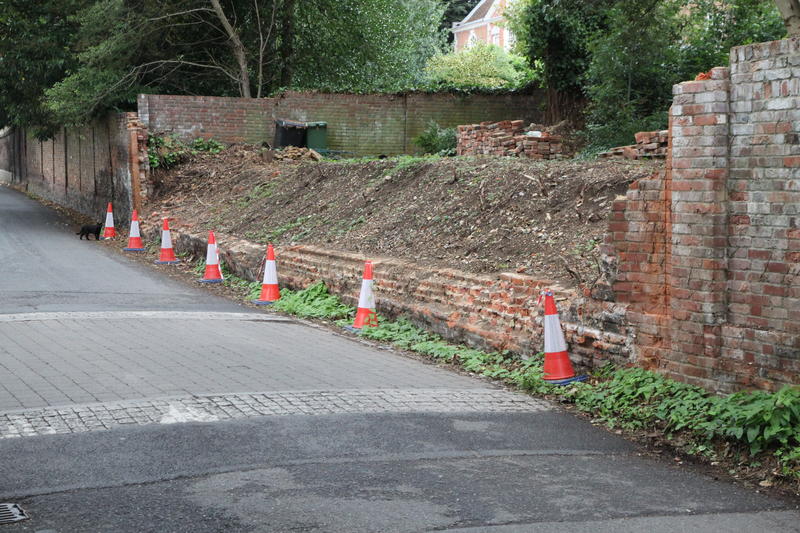
Elibank Court's fallen wall
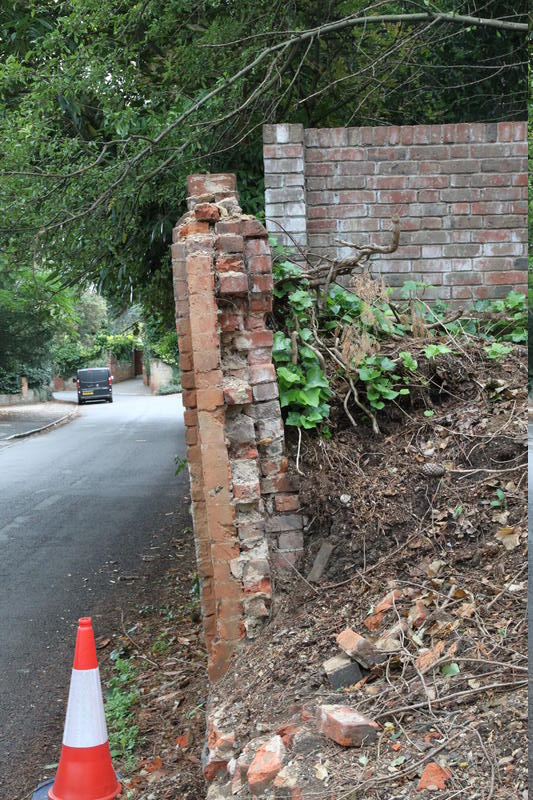
Leaning wall at Elibank House - there is a chestnut tree pressing on this further along, which will surely cause trouble in a year or so.
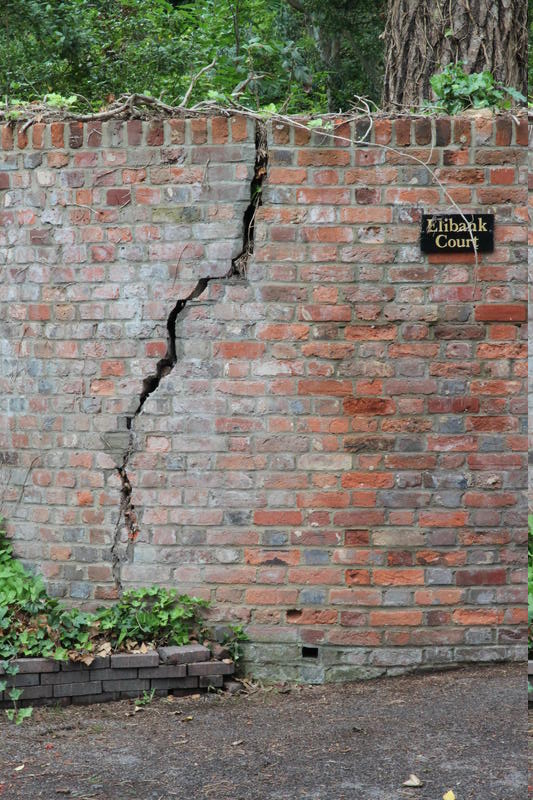
Crack in modern section of wall - this shows the effect of over-strong mortar.
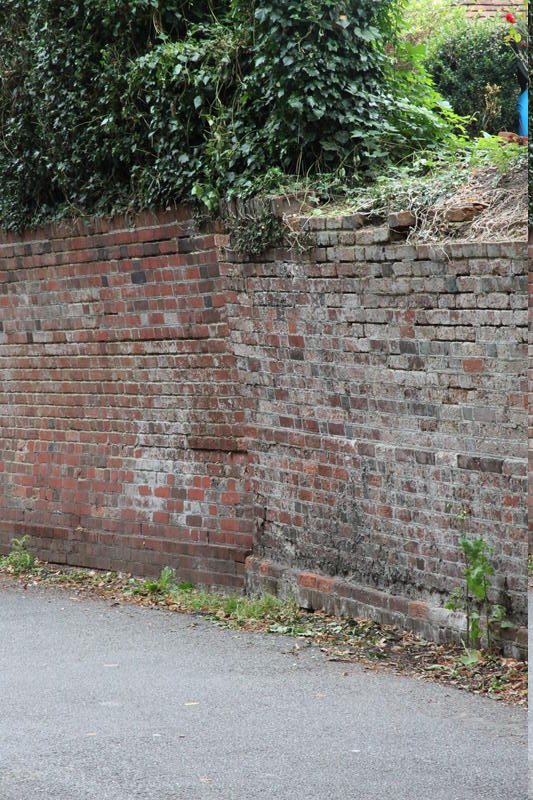
Dangerous wall at Hill House - don't be near this when it falls!
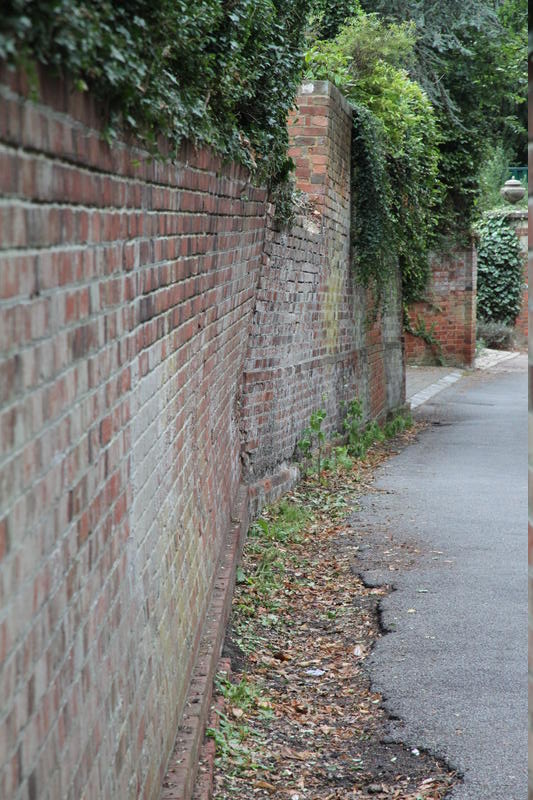
Hill House wall again
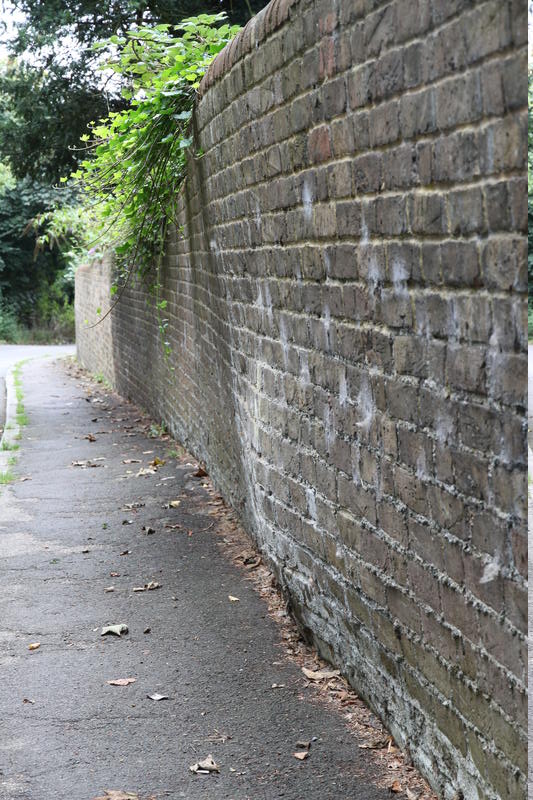
Bulging wall on Boundary Road (Wellbank)
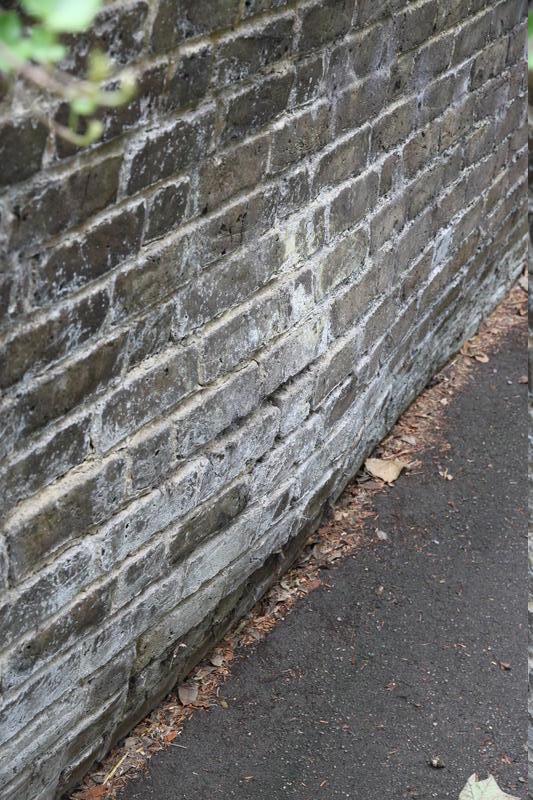
Closeup of the bulge: no cracked bricks! Unfortunately the wall above is leaning, so at least part of it will have to be re-built.
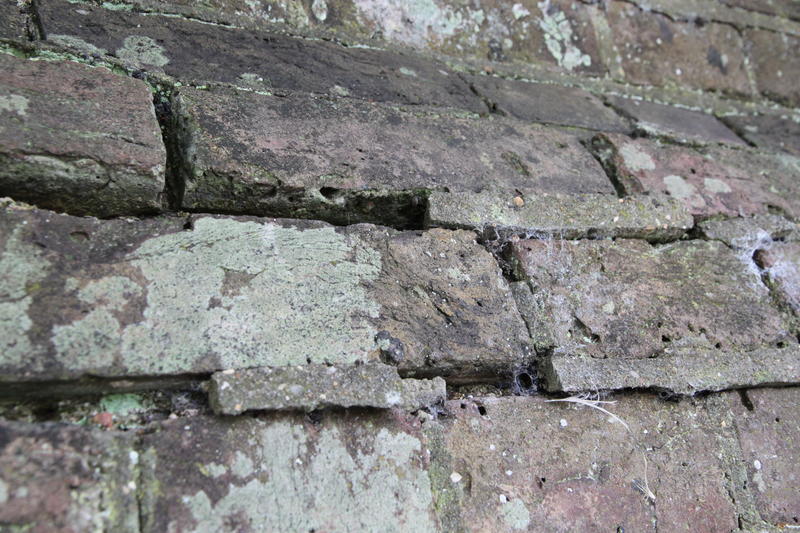
Failed Portland Cement pointing at the Rectory - lime mortar does not do this. Andrew Findlay -- AndrewFindlay - 24 Oct 2016